The Paradigm Shift from Proof-of-Concept to Production AI Agents
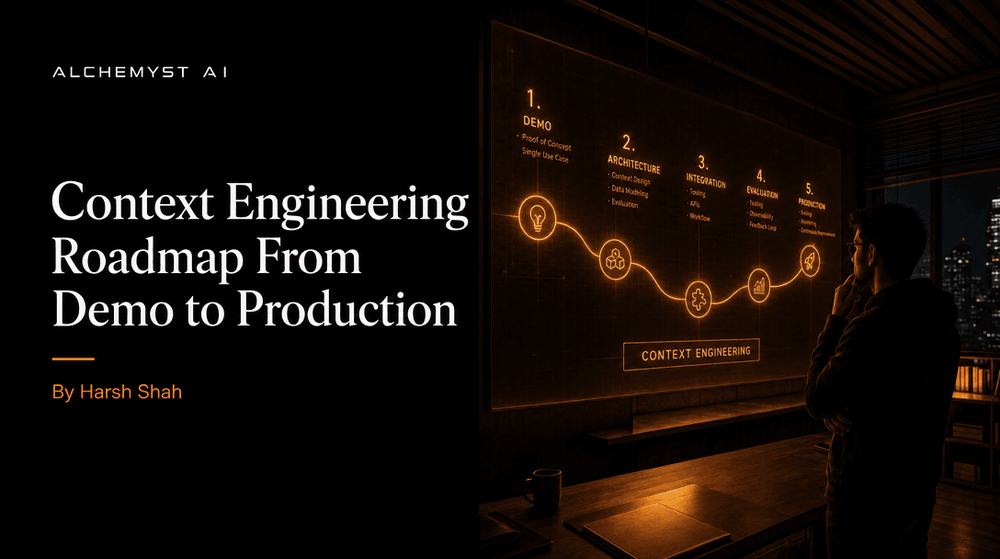
The artificial intelligence landscape has undergone a massive transformation in a remarkably short timeframe. We have evolved from utilizing basic generative AI chatbots to engineering highly autonomous systems known as AI agents. While building a proof-of-concept (POC) agent in a controlled environment using frameworks like LangChain or LlamaIndex can be achieved in a matter of hours, building production AI agents is an entirely different engineering discipline. Moving from a demo that works eighty percent of the time to a highly reliable, scalable, and secure enterprise architecture introduces intense technical complexities.
When deploying to production, organizations immediately face severe challenges: hallucination management at scale, context window limitations, orchestration bottlenecks, security vulnerabilities, and unpredictable cloud computing costs. Furthermore, businesses attempting to utilize AI for critical operations—such as go-to-market (GTM) strategy execution and advanced sales automation—must ensure that these autonomous agents behave deterministically while handling probabilistic language models. This comprehensive guide outlines the definitive reference architecture and necessary MLOps frameworks required to transition your AI agents from isolated prototypes to mission-critical production systems.
The Core Challenges in Deploying AI Agents
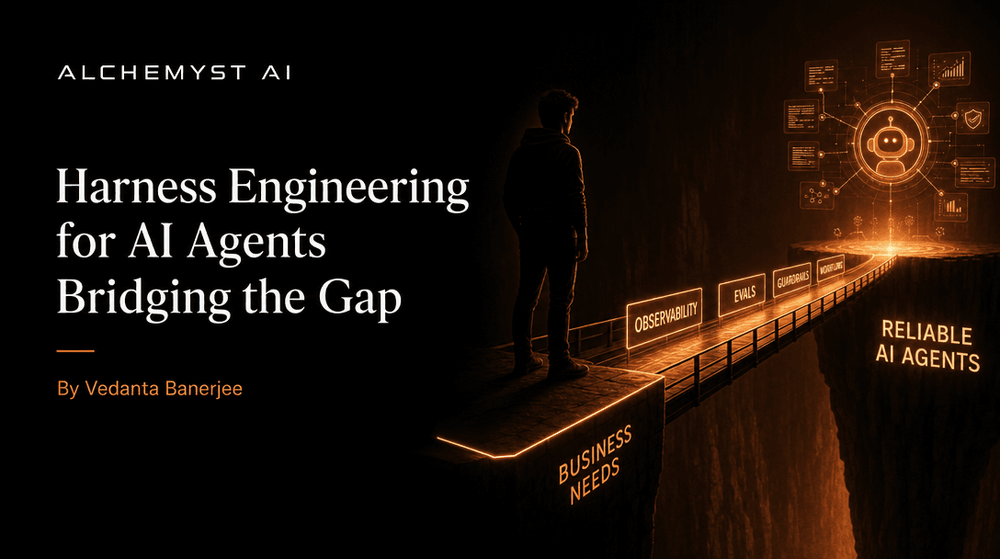
Before diving into architectural solutions, it is crucial to understand why so many AI agent initiatives stall in the sandbox phase. The "demo-to-deployment gap" is a well-documented phenomenon caused by several underlying technical constraints that generic API wrappers fail to address.
Memory and Context Degradation over Time
A primary failure point in non-production agents is their inability to retain accurate, persistent context. Basic agents rely solely on the LLM's finite context window. As the conversation or task sequence elongates, the agent begins to "forget" early instructions or user preferences, leading to cyclical loops and task failure. Without an externalized, persistent memory architecture, an AI agent cannot maintain the necessary state for long-running workflows.
Orchestration and Tool Selection Bottlenecks
Production AI agents are not just text generators; they are systems that take actions. They interact with CRM databases, execute code, send emails, and process real-time events. A simplistic ReAct (Reasoning and Acting) loop often breaks down when faced with complex, multi-step planning. In enterprise environments, agents must reliably select the correct tool from a massive repository of APIs, parse the returned data flawlessly, and adapt if an API endpoint fails or returns an error code.
The Complexity of Voice AI Latency
When applying agentic workflows to voice interactions, the latency budget shrinks from seconds to milliseconds. A text-based agent might take five seconds to "think" and fetch data, but a five-second pause in a voice call creates a severely disjointed user experience. Voice AI agents require specialized infrastructure that handles speech-to-text (STT), LLM processing, tool execution, and text-to-speech (TTS) concurrently via streaming architectures.
A Definitive Reference Architecture for Production AI Agents
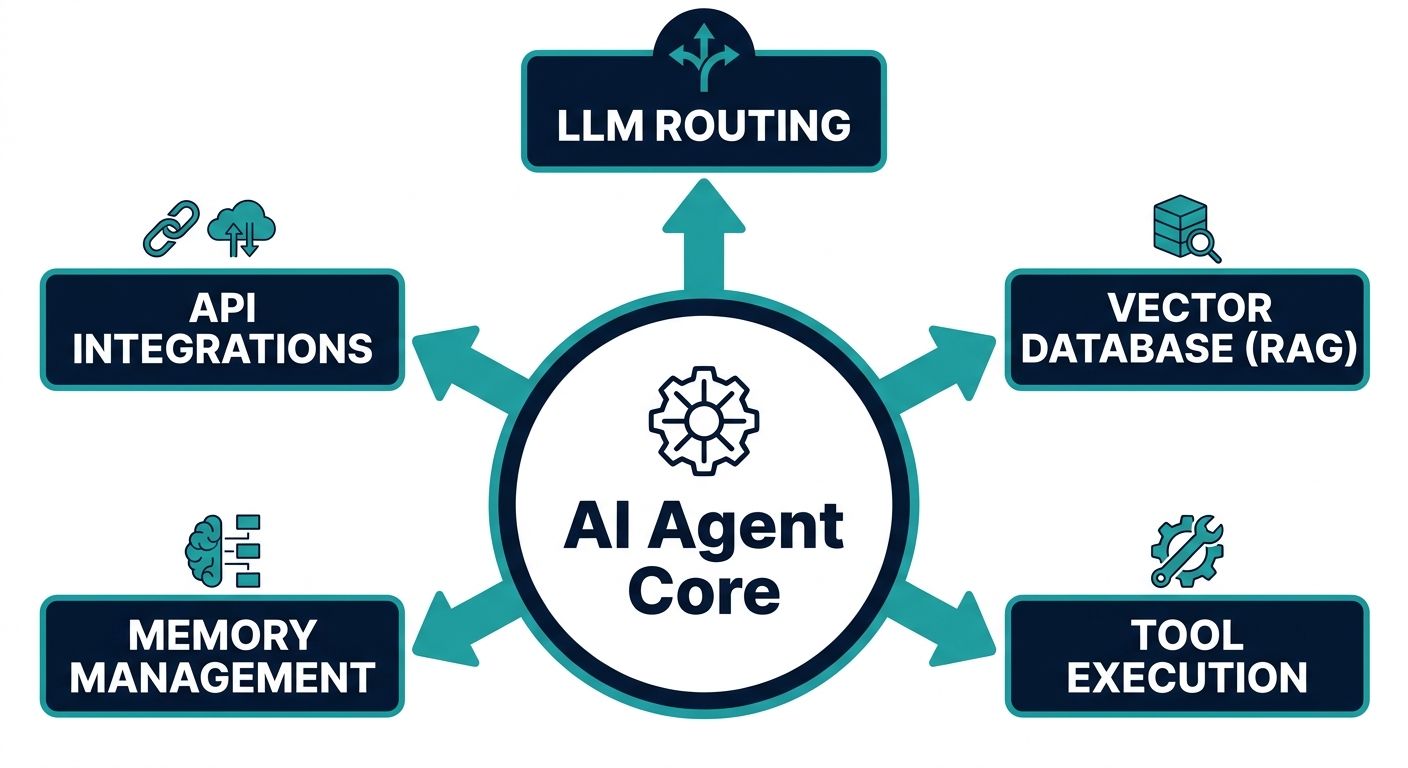
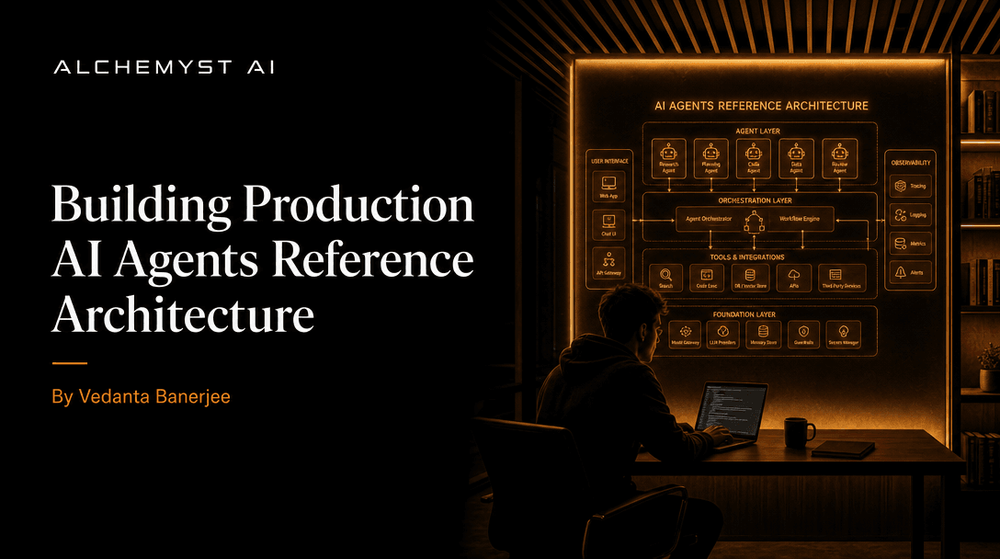
To successfully navigate the complexities of deployment, organizations must adopt a robust, multi-layered reference architecture. This framework separates concerns, allowing engineering teams to scale, monitor, and secure each component independently.
Layer 1: AI-Native Context Management
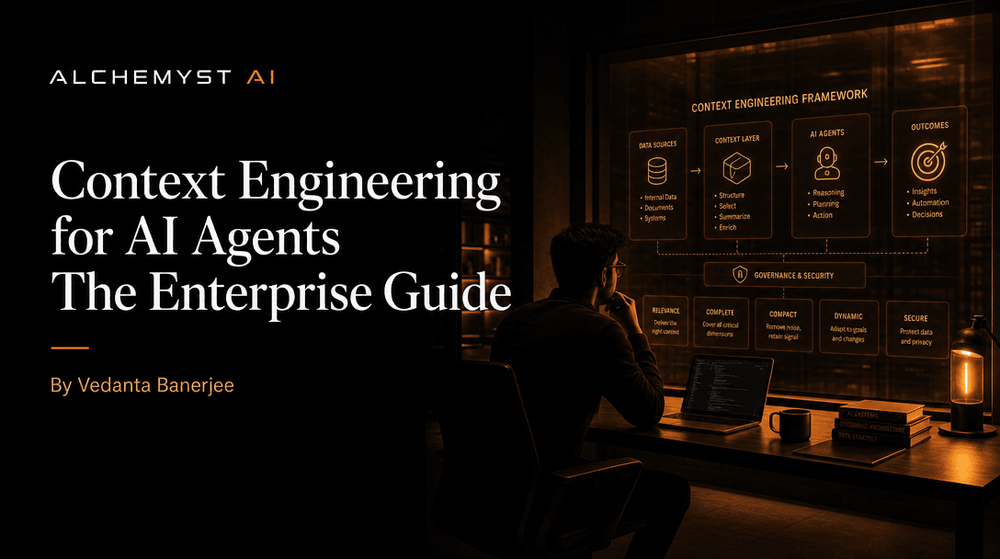
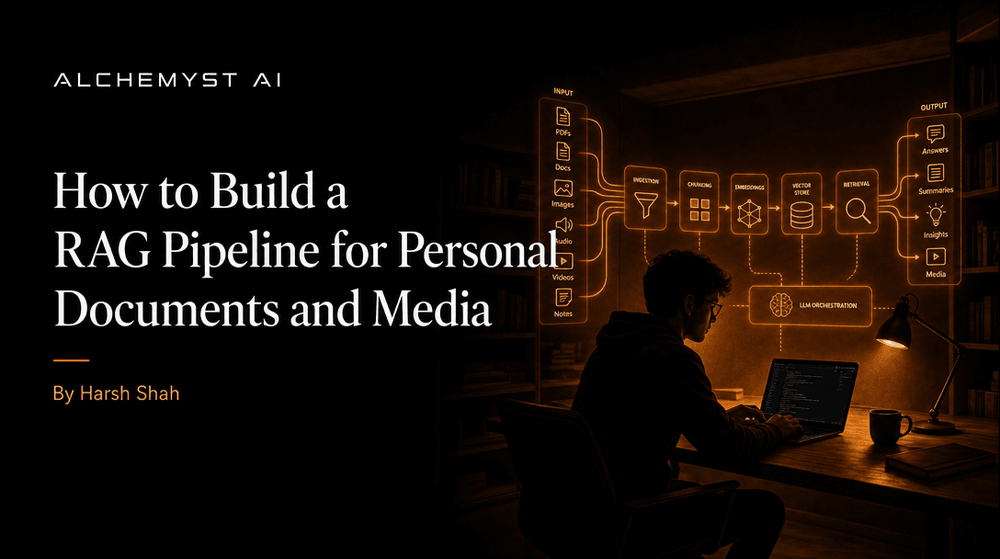
The foundation of any enterprise agent is its context management layer. This involves dynamically injecting the right information, system prompts, and historical data into the LLM at inference time. Advanced systems utilize Retrieval-Augmented Generation (RAG) pipelines enhanced with semantic caching and hybrid search (combining dense vector search with keyword-based sparse search). The goal is to provide the agent with a grounded understanding of the specific business domain, minimizing hallucinations and ensuring responses are firmly rooted in corporate knowledge.
At Alchemyst AI, we simplify building production AI agents through our robust AI-Native Context Management and dedicated Memory services. Our platform seamlessly retains user preferences and conversation histories across sessions, ensuring your GTM and sales automation workflows remain contextually aware and highly personalized without the typical engineering overhead.
Layer 2: Advanced Routing and Orchestration
Instead of relying on a single monolithic LLM prompt to handle every user request, production architectures employ a "Router" pattern. A lightweight, high-speed classifier model evaluates the incoming task and routes it to a specialized sub-agent. For example, a customer inquiry might be routed to a "Support Agent," while a request to generate a targeted outreach campaign is routed to a "Sales Automation Agent." This multi-agent orchestration reduces latency, decreases token usage, and increases overall accuracy, as each sub-agent is equipped only with the tools and prompts necessary for its specific domain.
Layer 3: Secure Tool Execution and API Integrations
An agent is only as powerful as the actions it can take. In a production environment, tool execution must be strictly governed. This layer acts as the interface between the agent's reasoning engine and the outside world. It requires secure sandboxing (especially if the agent is writing and executing Python code), stringent authentication mechanisms, and robust error handling. If a third-party API goes down, the tool execution layer must gracefully inform the agent, prompting it to either retry with an exponential backoff or inform the user of the limitation, rather than crashing the entire system.
Layer 4: Real-Time Memory and State Persistence
Unlike stateless REST APIs, agents require a "Memory Layer." This is typically divided into Short-Term Memory (managing the immediate state and context of the current task) and Long-Term Memory (storing user preferences, past interactions, and generalized learnings in a persistent database). Production systems use advanced memory compression engines and entity extraction models to continually summarize and update long-term storage, ensuring the agent grows smarter over time without overwhelming the token limits of the core LLM.
Bridging the Demo-to-Deployment Gap for Voice AI
Voice AI represents the most challenging frontier in agent deployment. Standard architectures that process tasks sequentially are fundamentally incompatible with natural human conversation. To build production-ready voice AI agents, infrastructure must support full-duplex communication and intelligent interruption handling.
When a human interrupts a voice agent, the system must immediately halt the TTS playback, truncate the LLM's ongoing generation, and rapidly process the new audio input to update the conversational state. This requires websocket-based streaming across the entire pipeline. Additionally, voice agents demand highly optimized endpointing—the ability to detect when a user has finished speaking based on semantic completeness and acoustic pauses, rather than just waiting for a hard-coded silence duration.
By leveraging platforms that specialize in these synchronous demands, engineering teams can bypass months of frustrating low-level infrastructure development. If your organization is struggling to operationalize these complex systems for sales and marketing workflows, Alchemyst AI provides the foundational infrastructure to streamline this exact process.
Essential MLOps Tooling for the Agent Lifecycle
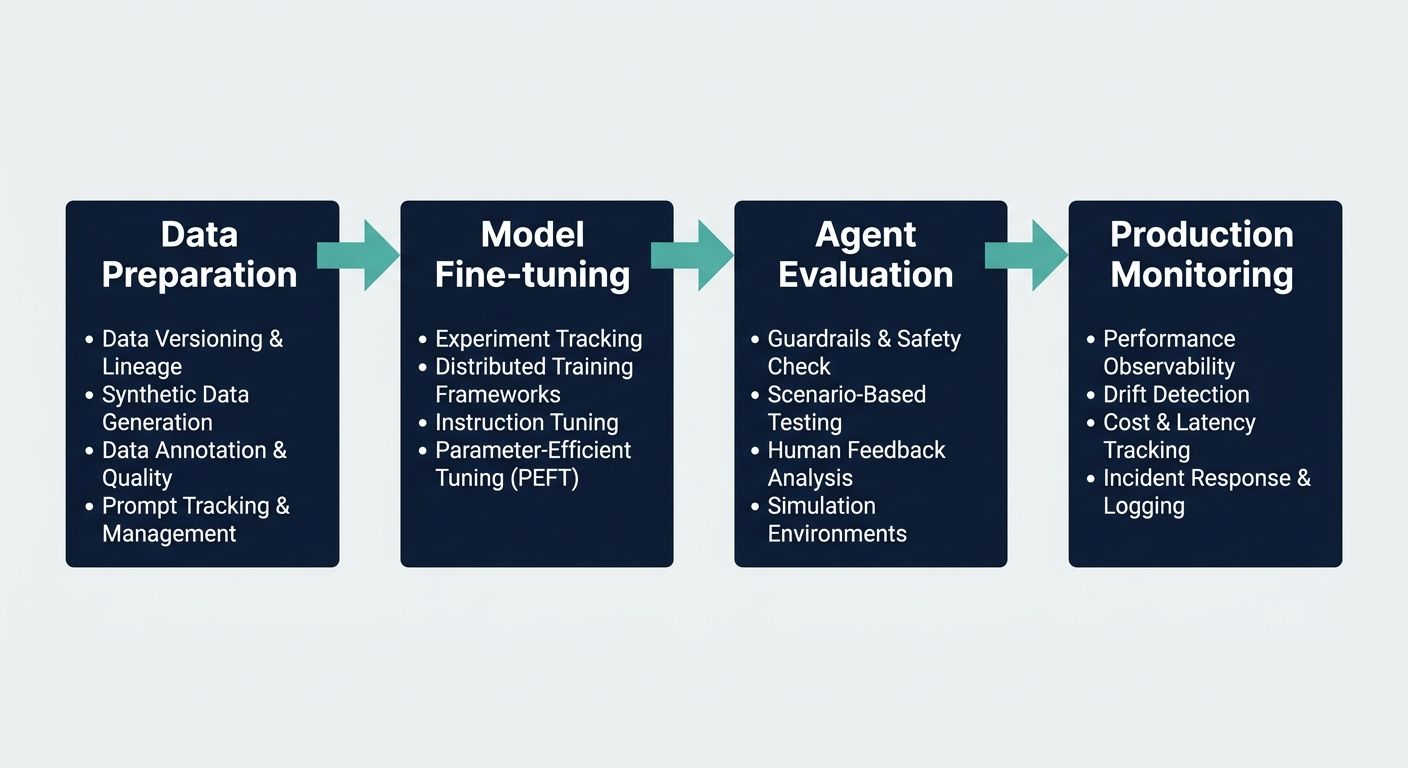
Building the agent is only half the battle; maintaining it in production requires a specialized discipline known as LLMOps or AgentOps. Traditional software monitoring tools are insufficient for tracking non-deterministic AI behaviors.
Deployment, Versioning, and Shadow Testing
Prompts and system configurations should be treated as code. They require version control and continuous integration/continuous deployment (CI/CD) pipelines. Before a new agent version goes live, it should undergo "shadow testing"—processing real production traffic silently in the background alongside the live version. By comparing the shadow agent's intended tool calls and responses against the live agent's outputs, engineers can catch regressions before they impact the end-user experience.
Comprehensive Observability and Tracing
When an AI agent fails, debugging is notoriously difficult due to the multi-step nature of its reasoning. Production observability requires granular tracing of every step in the agent's ReAct loop. Engineers must be able to visualize the exact context injected, the raw prompt sent to the LLM, the model's generated reasoning, the specific API endpoint called, the latency of that call, and the final parsed output. Distributed tracing tools adapted for AI are non-negotiable for enterprise deployments.
Security, Governance, and Human-in-the-Loop Strategies
The autonomous nature of AI agents introduces unique security vectors that must be mitigated at the architectural level.
Agent-Specific Security and Prompt Injection
Malicious actors will inevitably attempt prompt injection attacks, trying to manipulate the agent into executing unauthorized commands, exfiltrating internal data, or bypassing safety guardrails. Production architectures must implement input validation layers, input sanitization, and specialized "guardrail" models that evaluate both the user's input and the agent's proposed output for policy violations before execution.
Implementing Human-in-the-Loop (HITL)
For high-stakes tasks—such as executing large financial transactions or sending mass outbound sales emails—fully autonomous execution is often too risky. A robust architecture incorporates Human-in-the-Loop checkpoints. When the agent reaches a critical decision boundary, it pauses execution and routes a summary of its intended action to a human supervisor for approval. This governance structure allows businesses to leverage the speed and scale of AI while maintaining strict quality control and compliance.
Cost Analysis and Scaling Strategies
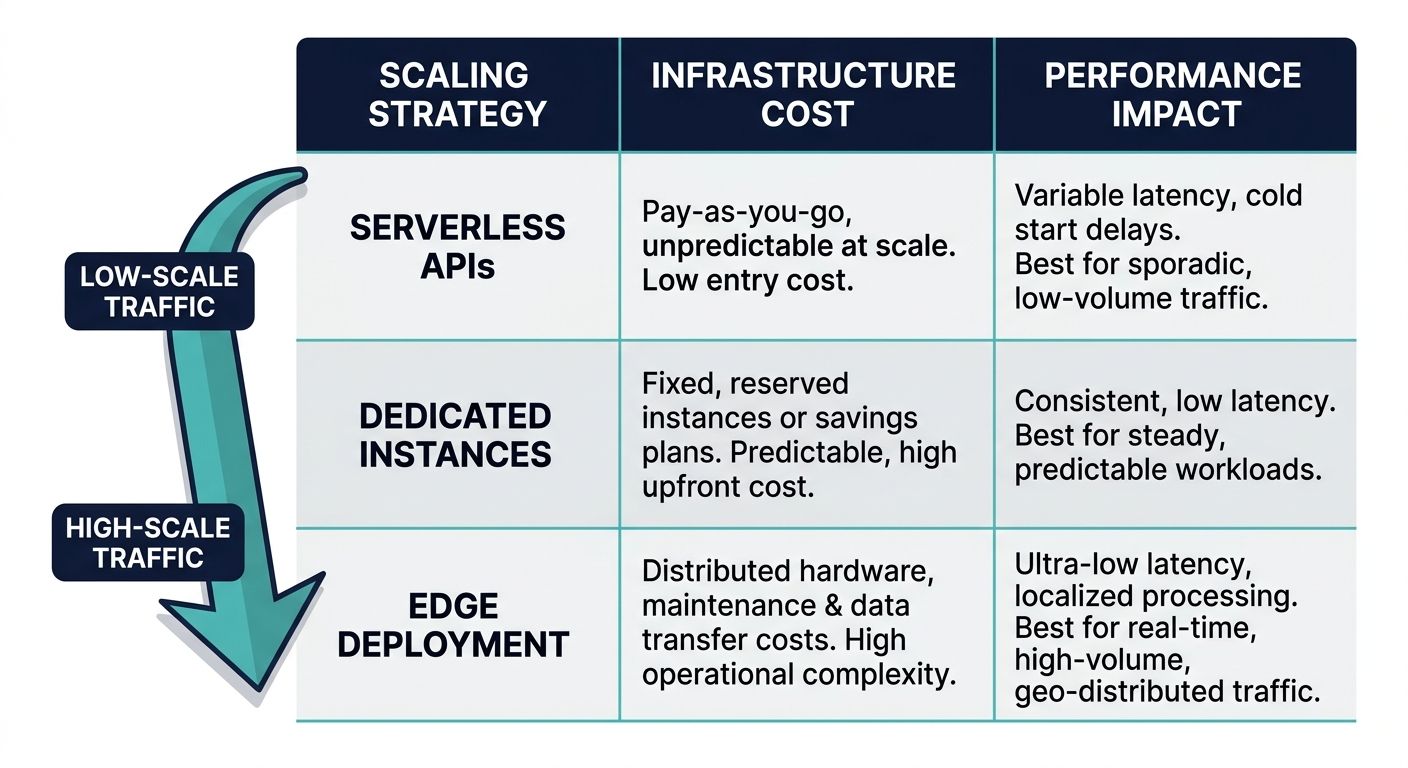
Scaling AI agents can lead to runaway cloud costs if not managed architecturally. Every "thought" and "action" the agent takes consumes tokens. To optimize costs in production, teams should employ model routing: sending complex, nuanced tasks to large, expensive models (like GPT-4), while routing simpler, repetitive tasks to faster, cheaper, or fine-tuned open-source models (like Llama 3 or Mistral). Furthermore, implementing semantic caching can dramatically reduce costs by serving pre-computed answers for frequently asked questions without hitting the LLM API.
Implementing Your AI Strategy
Transitioning to an AI-native operational model requires a commitment to structural excellence. By focusing on robust memory persistence, secure orchestration, voice-specific latency optimizations, and comprehensive observability, businesses can deploy AI agents that deliver tangible ROI rather than just serving as impressive technical demonstrations. For teams looking to accelerate their deployment timeline, you can easily Book a Demo to see how our infrastructure natively handles these complex orchestration and memory challenges, specifically tailored for enterprise automation and GTM motions.
Conclusion
Building production AI agents is an intricate engineering challenge that moves far beyond basic API integrations. It requires a holistic architectural approach that respects the nuances of probabilistic models while enforcing deterministic business logic. By implementing the reference architecture detailed in this guide—from AI-native context management and secure tool execution to rigorous MLOps and human-in-the-loop governance—organizations can successfully bridge the gap between proof-of-concept and a resilient, scalable production environment.
Ready to bridge the gap between proof-of-concept and a fully scalable, enterprise-grade AI architecture designed specifically for GTM and sales automation? Let Alchemyst AI handle the heavy lifting of context management and orchestration.
Book a free demo