
The Paradigm Shift in AI Development
As the artificial intelligence landscape matures, the initial excitement surrounding basic large language models (LLMs) is rapidly giving way to a demand for robust, scalable enterprise deployments. In the early days of generative AI, the focus was almost entirely on how to ask the model the right question to get the right answer. This practice, known as prompt engineering, became the foundational skill for interacting with AI. However, as organizations attempt to move their AI initiatives from controlled proof-of-concept (PoC) environments into live production, they consistently hit a wall. This phenomenon is often referred to as the "demo-to-deployment gap."
The root cause of this gap is simple: real-world enterprise applications, particularly intelligent voice agents and complex go-to-market (GTM) automation tools, require much more than a clever set of instructions. They require memory, dynamic data synthesis, real-time personalization, and statefulness. This is where the industry is experiencing a critical evolution, shifting the focus from simply instructing models to architecting the environments in which they operate. Understanding the distinction between context engineering vs prompt engineering is now the defining factor between a fragile AI wrapper and a resilient, enterprise-grade AI system.
What is Prompt Engineering?
Prompt engineering is the art and science of formulating questions, instructions, and inputs to effectively guide a large language model toward generating a desired output. At its core, it is an instruction-centric discipline. A prompt engineer carefully selects words, structures formatting, and utilizes techniques like few-shot prompting or chain-of-thought reasoning to coax the highest quality response from a stateless model.
In a standard prompt engineering workflow, the developer is concerned with the immediate interaction. They are optimizing the "user message" and the static "system message." For instance, a prompt might dictate: "You are a helpful customer service assistant. Answer the user's question politely based only on the provided text. If you do not know the answer, say so." While highly effective for single-turn tasks like summarizing a document, drafting an email, or generating code snippets, prompt engineering is inherently limited by the nature of the models it serves: they are stateless.
The Limitations of Prompt Engineering in Production
When businesses attempt to scale AI using only prompt engineering, they encounter severe bottlenecks. Because LLMs lack persistent memory, every single interaction requires the prompt engineer to forcefully inject all relevant history, rules, and data into the model's context window. As conversations grow longer or tasks become more complex, this context window fills up. This leads to increased latency, exorbitant token costs, and a degradation in the model's ability to focus on the core instruction—a phenomenon known as the "lost in the middle" effect.
Furthermore, prompt engineering is static. It does not account for the real-time changes in a user's account status in a CRM, the nuanced history of a multi-turn voice conversation, or the need to dynamically fetch external data mid-conversation. Relying solely on prompt engineering for an enterprise application is akin to hiring a brilliant employee but forcing them to read the entire company handbook and every previous customer email from scratch every time the phone rings.
What is Context Engineering?
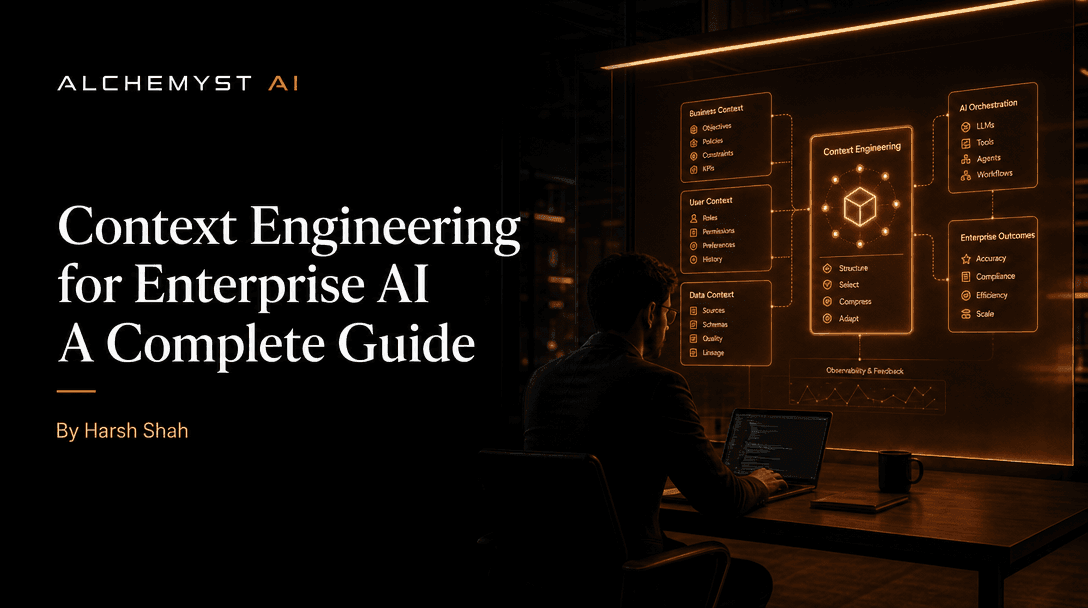
Context engineering, in stark contrast, is a systems architecture discipline. It moves beyond the static text of the prompt and focuses on building a dynamic, stateful infrastructure—an AI context layer—that surrounds the LLM. If prompt engineering is about asking the right question, context engineering is about building a comprehensive brain that inherently knows the background before the question is even asked.
Context engineering involves the systematic retrieval, evaluation, synthesis, and injection of relevant information into the AI's operational environment in real-time. It is the architectural practice of integrating vector databases for Retrieval-Augmented Generation (RAG), connecting live CRM systems, managing conversational memory, and executing real-time data filtering. The goal of a context engineer is not just to talk to the AI, but to construct the data pipelines and state management systems that allow the AI to act with deep, situational awareness.
The Pillars of an AI Context Layer
A robust context engineering architecture relies on several foundational pillars. First is Dynamic Information Retrieval. Instead of hardcoding facts into a system prompt, a context layer dynamically queries enterprise databases, APIs, and document stores based on the user's immediate intent. Second is Memory and Statefulness. Context engineering implements mechanisms to persist user preferences, historical interactions, and session context, compressing and storing this data so it can be seamlessly retrieved across multiple sessions or different agents.
Third is Contextual Synthesis and Arithmetic. It is not enough to simply dump retrieved data into a prompt. Context engineering requires algorithms that evaluate the relevance of retrieved data, scoring and filtering it so that only the highest-fidelity information reaches the LLM. This precise control of the information diet prevents hallucinations and drastically reduces token bloat, ensuring high-speed, cost-effective inference.
Key Differences: Context Engineering vs Prompt Engineering
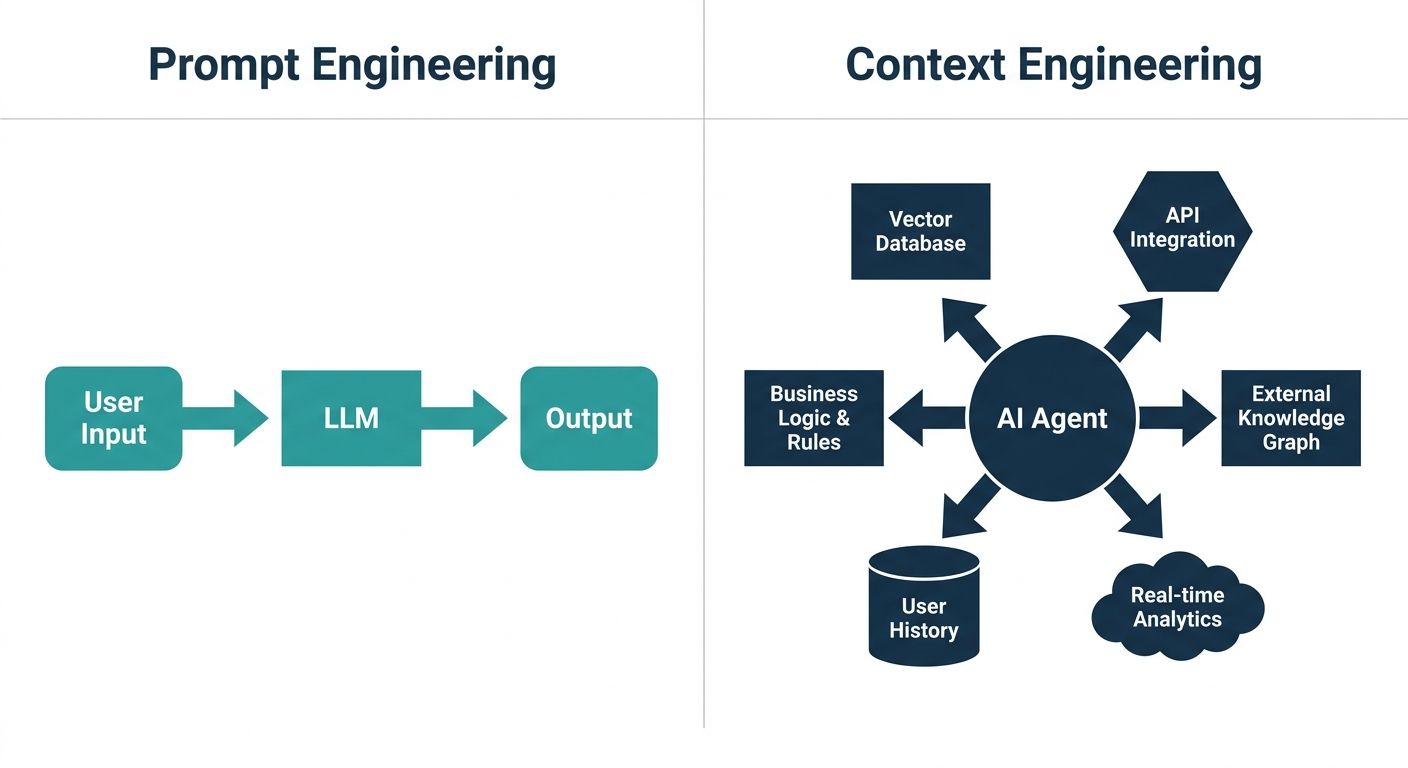
To truly grasp the shift required for enterprise AI deployment, IT architects and business leaders must understand the distinct dichotomies between these two practices across several technical dimensions.
Scope and Scale: Instruction vs. Environment
Prompt engineering is hyper-focused on the micro-interaction. It deals with the phrasing, tone, and logical flow of a single input. Context engineering operates at the macro-level. It is concerned with data pipelines, integration latency, database synchronization, and the holistic environment in which the model functions. While a prompt engineer optimizes a text string, a context engineer optimizes data flow architectures.
Statefulness: Stateless vs. Persistent Memory
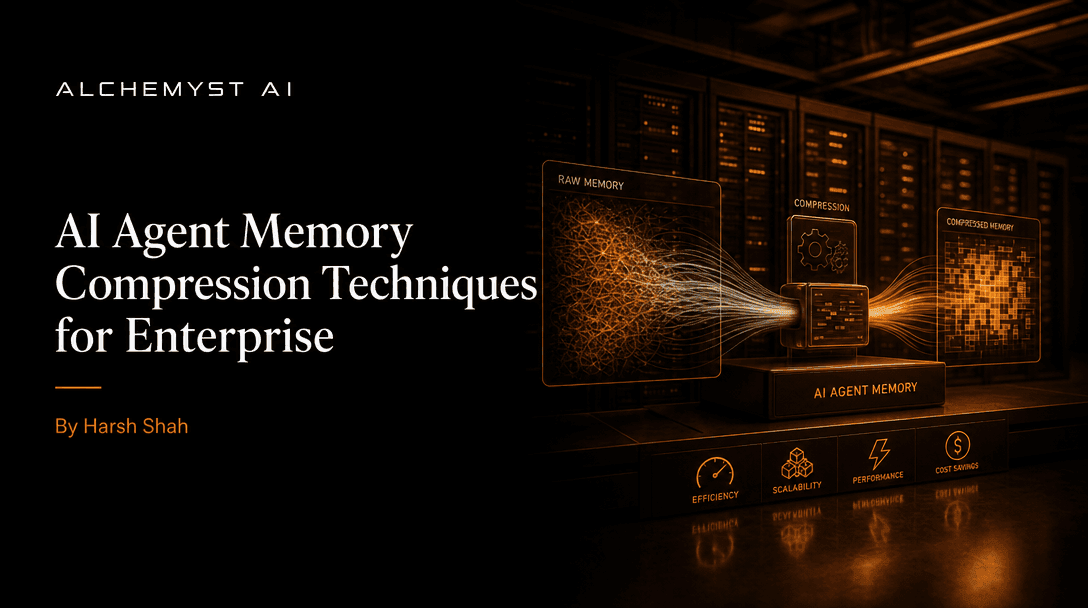
As mentioned, LLMs are fundamentally stateless. Prompt engineering accepts this limitation and attempts to work around it by cramming history into the context window. Context engineering solves the limitation by building external, persistent memory structures. By utilizing semantic search, embedding models, and memory compression engines, context engineering gives the AI an actual, accessible history, allowing it to "remember" across diverse sessions without overloading the immediate token limits.
Data Integration: Static vs. Dynamic Streams
Prompt engineering relies on static data provided at the time of the request. If a customer's billing status changes mid-conversation, a system built purely on prompt engineering will remain unaware unless explicitly told by the user. Context engineering connects the AI directly to dynamic data streams. By bridging the model with enterprise tools like Salesforce or Hubspot, the context layer actively listens for and integrates real-time state changes, ensuring the AI is always operating on the absolute latest truth.
The Human Element: Linguist vs. Architect
The skill sets required for each discipline differ vastly. Prompt engineering favors strong linguistic skills, logical structuring, and an intuitive understanding of how models interpret text. It is accessible to power users, domain experts, and content creators. Context engineering requires deep technical expertise in software engineering, backend architecture, API integrations, data engineering, and system design. It is the domain of technical evaluators, developers, and system architects.
Why Enterprise Voice AI Demands Context Engineering
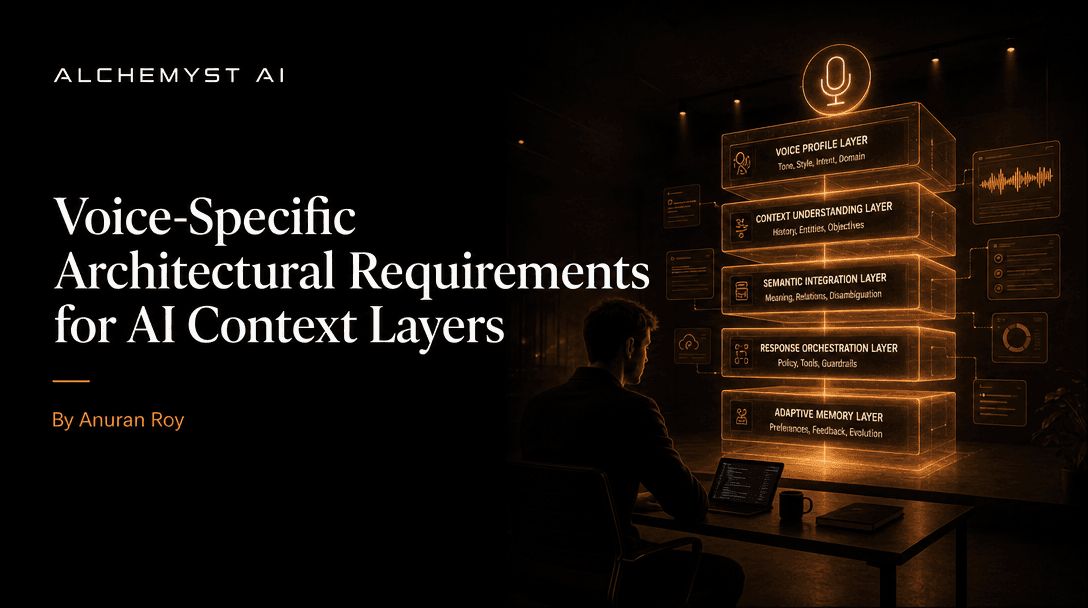
Nowhere is the distinction between these two disciplines more apparent—and more critical—than in the realm of AI-powered voice agents. Building a text-based chatbot that takes five seconds to respond is annoying, but building a voice agent that takes five seconds to respond is fundamentally broken. Voice interaction demands ultra-low latency, natural conversational flows, and immediate adaptability. Basic AI wrappers built on prompt engineering simply cannot survive in a multi-turn voice environment.
When a human speaks to an AI voice agent, the system must transcribe the audio (STT), understand the intent, fetch relevant data, generate a response, and synthesize it back into speech (TTS) in under a second. If the system relies on a massive, bloated prompt filled with static data, the LLM inference time will skyrocket, resulting in awkward pauses and robotic interactions. Context engineering minimizes this payload.
For instance, leveraging platforms like Alchemyst AI provides enterprises with an AI-native context management system that inherently understands multi-turn dialogue without requiring developers to manually stitch together disparate data streams. By dynamically injecting only the exact data needed for that specific millisecond of conversation, inference times remain lightning fast. Furthermore, voice conversations are non-linear; users interrupt, change subjects, and reference things said ten minutes ago. Managing this conversational state requires a sophisticated context layer that prompt engineering alone cannot facilitate.
Overcoming the Demo-to-Deployment Gap
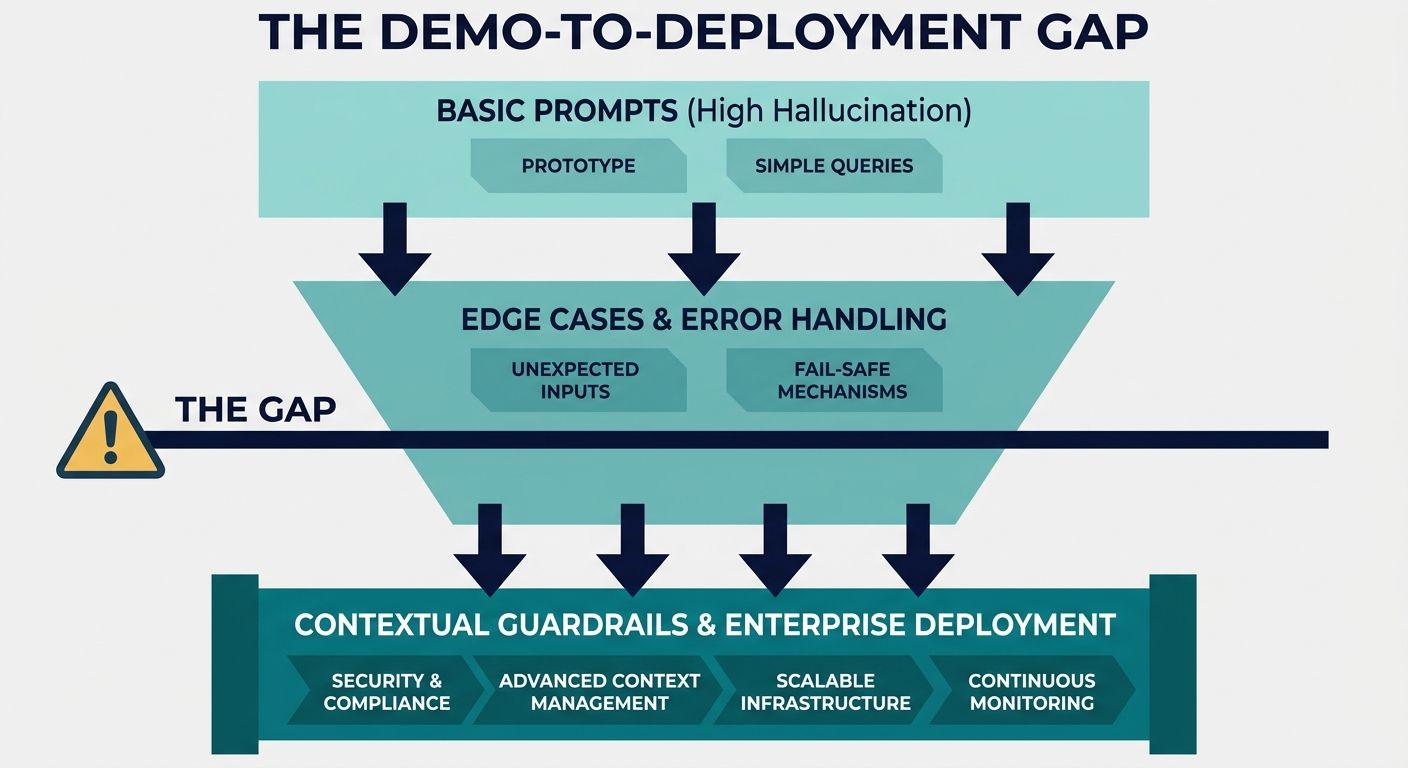
The vast majority of AI initiatives fail because they attempt to deploy PoC architectures into production environments. A PoC usually involves a carefully crafted system prompt and a static document. It looks magical in a demo. But when exposed to real users who provide ambiguous inputs, multi-part questions, and edge cases, the system breaks down.
To cross this demo-to-deployment gap, enterprise IT leaders must adopt a migration blueprint that moves their infrastructure from basic instruction to dynamic context. This involves decoupling the "brain" (the LLM) from the "knowledge" (the data). Rather than trying to teach the LLM everything via prompts, organizations must build secure, real-time pipelines that feed the LLM exactly what it needs, precisely when it needs it.
Alchemyst AI is powered by the proprietary Kathan engine, which introduces "context arithmetic"—a specialized process for systematically determining relevant information for voice agents. Through its sophisticated Five-Stage Context Arithmetic Pipeline, the platform seamlessly synthesizes diverse data streams, integrating real-time CRM and RAG data to eliminate the demo-to-deployment gap commonly seen in enterprise AI implementations.
Architectural Blueprint: Building the Context Layer
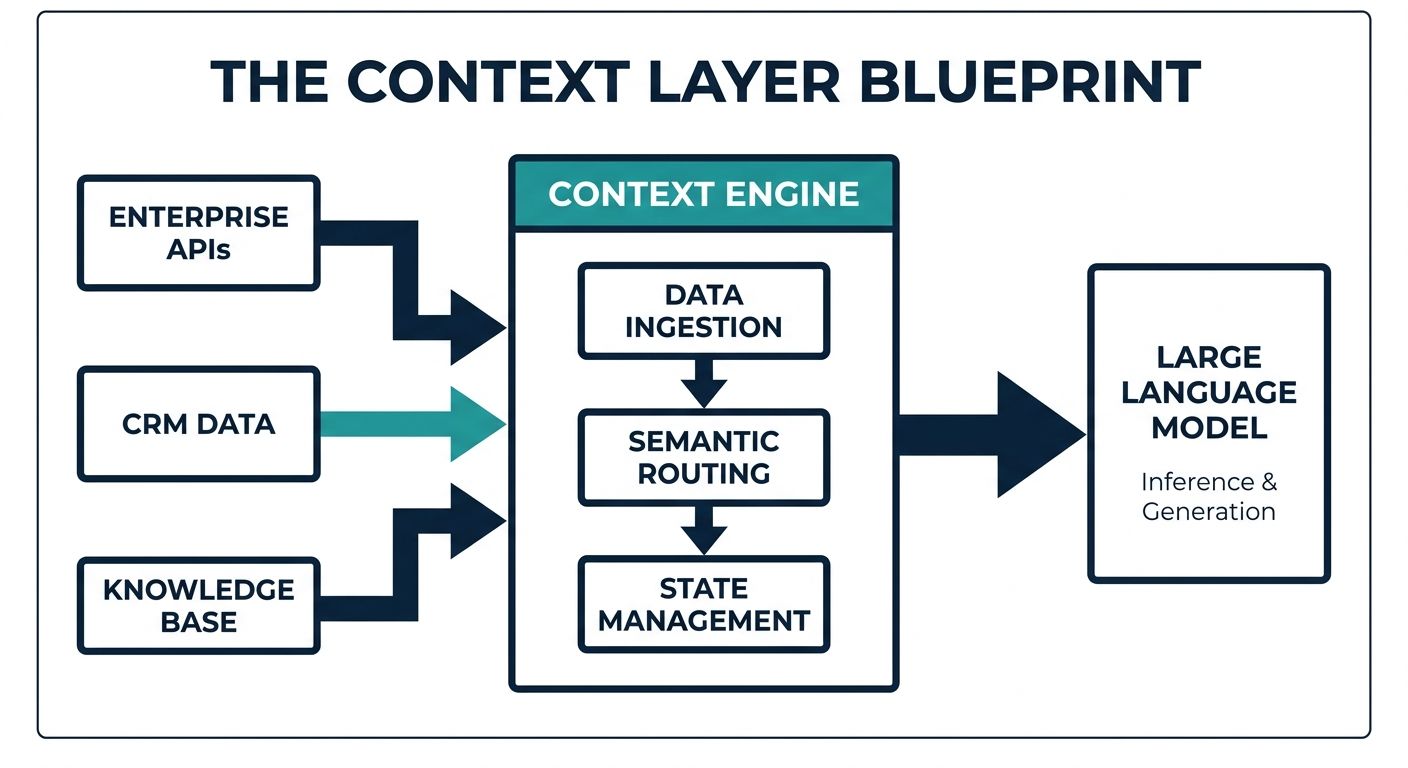
Implementing a context engineering framework requires a strategic architectural approach. While specific tech stacks will vary, the foundational blueprint remains consistent for robust AI deployments.
1. Intent Recognition and Routing
Before any prompt is sent to an LLM, the context layer must intercept the user's input to determine the core intent. Is the user asking a factual question, requesting an account update, or complaining about a service? Based on this semantic routing, the system can determine which downstream databases or APIs need to be queried. This prevents unnecessary data fetching and keeps the ultimate payload lightweight.
2. The Retrieval-Augmented Generation (RAG) Pipeline
For knowledge-based queries, the context layer utilizes a RAG pipeline. This involves converting company documentation, product catalogs, and policies into vector embeddings stored in a vector database. When a query arrives, the system performs a similarity search to extract only the most relevant paragraphs. Context engineering ensures that this retrieval is highly accurate, often employing techniques like hybrid search (combining keyword and semantic search) or re-ranking to surface the absolute best context.
3. Real-Time System Integration (CRM & APIs)
If the intent is transactional, the context layer must query live systems. If a user asks, "Where is my order?", the architecture must parse the user ID, authenticate against the company's shipping API, retrieve the tracking status, and format that raw JSON data into a clean context block. This dynamic injection is something a static prompt simply cannot perform.
4. Context Synthesis and Truncation
Once all relevant data is gathered from RAG pipelines, CRM systems, and conversation history, it must be synthesized. This is where advanced logic comes into play. The context layer must evaluate the total token count of the gathered data. If it exceeds the model's optimal window, the system must ruthlessly prioritize, truncate, and summarize the context. This "context arithmetic" guarantees that the final payload sent to the LLM is dense with high-value information, devoid of noise, and optimized for low-latency generation.
Evaluating AI Platforms for Context Mastery
As enterprises seek vendor solutions to accelerate their go-to-market strategies and automate sales functions, they must look past superficial AI features and evaluate the core infrastructure. When assessing AI agents, particularly for voice, IT architects should ask critical questions.
Does the platform offer persistent memory that survives beyond a single browser session? Can the system dynamically connect to internal CRMs without requiring manual prompt updates? How does the platform handle conflicting information between a system prompt and a retrieved document? Platforms that excel in these areas, treating context as a fluid and manageable state, will drastically outperform those that simply provide an interface to an LLM.
By recognizing the limitations of prompt engineering and embracing the architectural rigor of context engineering, businesses can finally build AI systems that are not just intelligent, but reliable, secure, and infinitely scalable. The future of enterprise AI does not belong to those who write the cleverest prompts; it belongs to those who architect the most intelligent context.
Mastering the transition from static prompts to dynamic context is the key to unlocking scalable, enterprise-grade voice and chat applications. Alchemyst AI provides the underlying context infrastructure, sales automation, and GTM capabilities needed to build intelligent, stateful agents that drive real business results.
Learn more about Alchemyst AI