The Evolution of Context Engineering for AI Agents
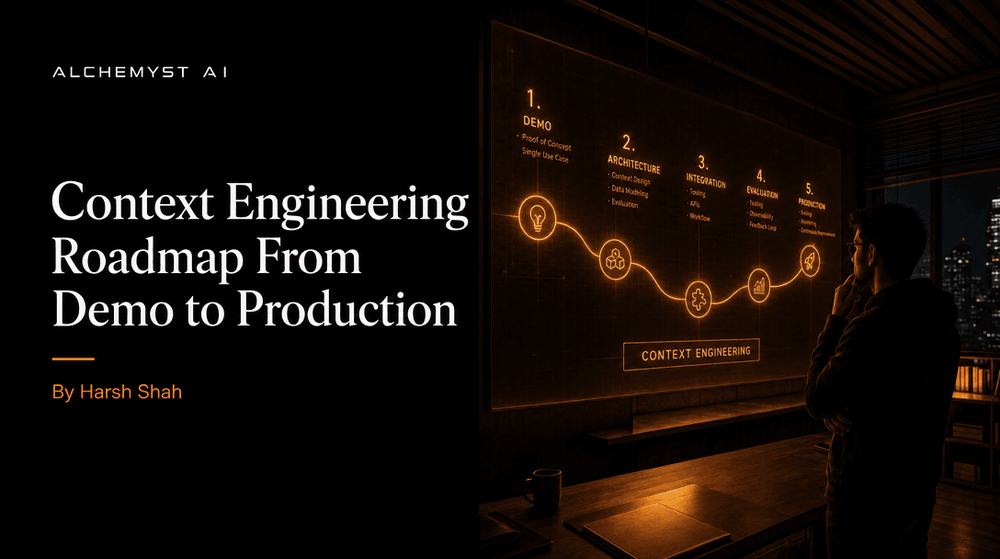
In the rapidly advancing landscape of artificial intelligence, basic conversational models have given way to sophisticated, autonomous systems capable of executing complex go-to-market (GTM) and sales automation tasks. At the heart of this evolution lies context engineering for AI agents. Unlike traditional prompt engineering, which focuses on refining the initial instructions given to a Large Language Model (LLM), context engineering is the complex architectural science of systematically orchestrating, retaining, and dynamically injecting relevant information into an AI's working memory over the course of extended, multi-turn interactions.
For enterprise environments, the stakes are exponentially higher. A customer interacting with an AI sales assistant or a voice-powered customer support agent expects a seamless, human-like flow of conversation. When an AI agent lacks robust context engineering, it suffers from conversational amnesia—asking repetitive questions, hallucinating details, and ultimately frustrating the user. Mastering context engineering ensures that AI agents can maintain situational awareness, adapt to real-time inputs, and seamlessly integrate historical data from CRMs and external knowledge bases.
Understanding the AI Context Layer
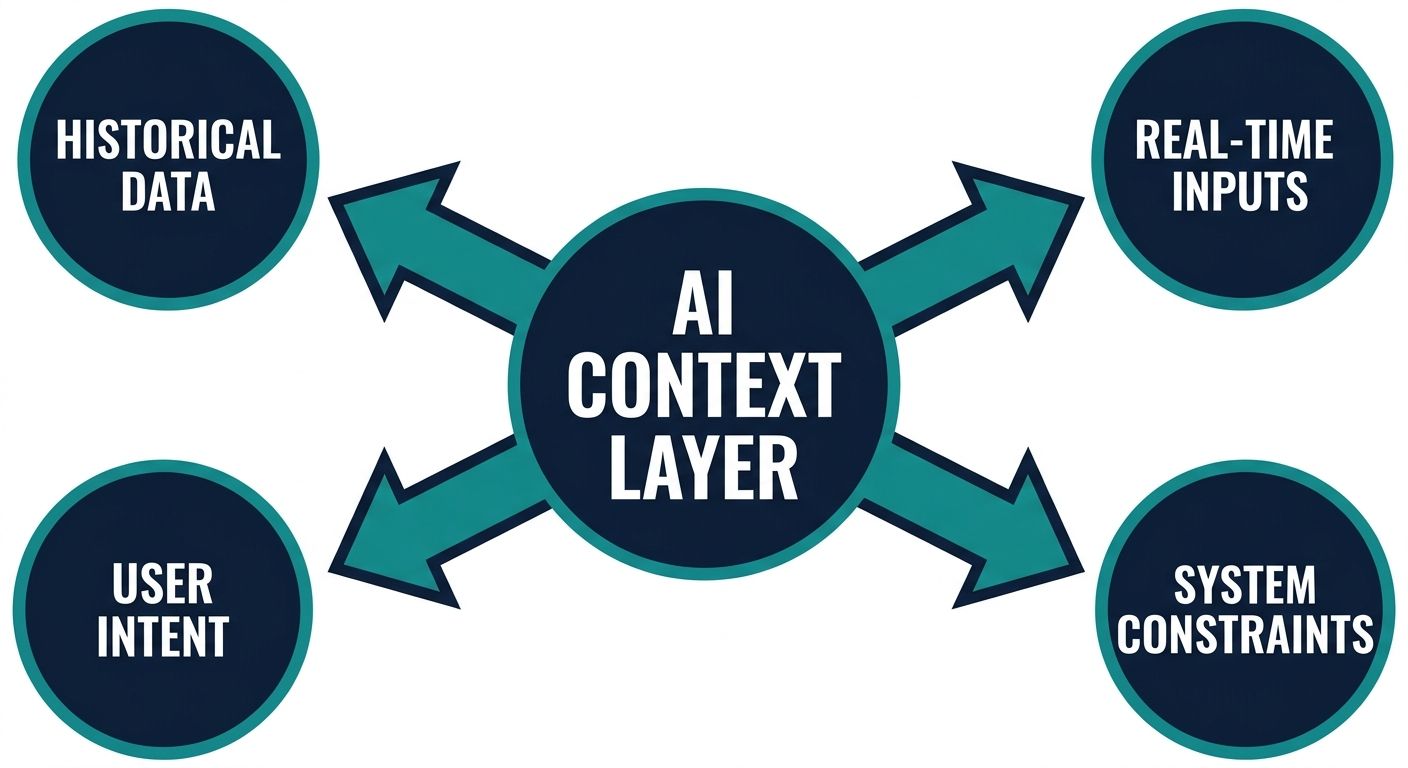
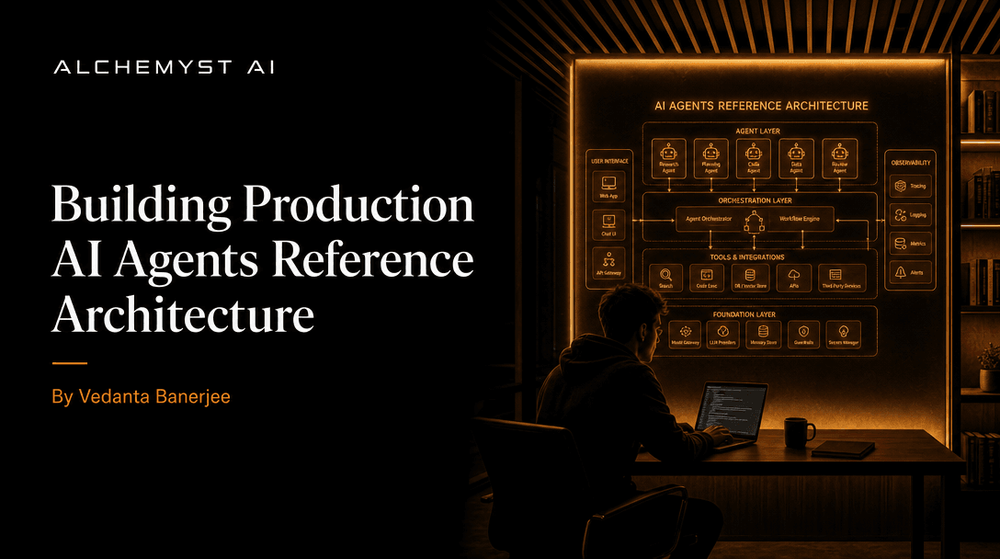
To truly grasp context engineering, enterprise architects must look beyond simple drop-in memory infrastructure and understand the concept of a dedicated AI context layer. An AI context layer is a specialized middleware architecture designed to synthesize diverse data streams for personalized, real-time interactions. It acts as the cognitive bridge between an AI agent's foundational language model and the enterprise's broader data ecosystem.
Many generic API platforms offer basic session memory, but they fail to address the complex requirements of enterprise-grade context management. A true context layer handles the ingestion of user metadata, the persistence of long-term conversational memory, and the real-time retrieval of hyper-relevant contextual fragments. It dictates how long a piece of information is held in working memory before being compressed, archived, or discarded to prevent the LLM's context window from overflowing.
Overcoming the Limitations of Prompt Engineering
Prompt engineering is static; it sets the initial rules of engagement. Context engineering, on the other hand, is entirely dynamic. As an AI agent navigates a complex sales automation workflow, the context must shift. If a prospect objects to pricing, the agent needs immediate contextual access to competitive pricing sheets, previous interactions with that specific prospect, and the specific stage of the sales pipeline—all injected into the prompt dynamically without exceeding token limits. This requires a robust architectural framework capable of semantic search, vector database integration, and intelligent token eviction policies.
Architectural Requirements for Enterprise Voice Agents
The challenges of context engineering are magnified significantly when applied to voice agents. While text-based agents can afford slight delays in response time, voice AI requires near-instantaneous processing to maintain conversational naturalness. Top-tier enterprise voice agent platforms must exhibit mastery over context handling to prevent awkward pauses and disjointed conversations.
STT and TTS Integration Realities
Building a context layer for voice agents necessitates deep integration with Speech-to-Text (STT) and Text-to-Speech (TTS) pipelines. When a user speaks, the STT engine converts audio to text, which must then be immediately enriched with context before being processed by the LLM. The resulting response must then be passed to the TTS engine. The entire round-trip must occur in milliseconds.
Furthermore, voice interactions are uniquely prone to interruptions, false starts, and filler words. A robust context engine must be capable of recognizing an interruption, halting the TTS output, recalculating the context based on the new input, and generating a highly contextualized response on the fly. This requires an architecture where the context layer operates independently of the LLM generation layer, continuously updating its state asynchronously.
Memory Persistence, Compression, and Duration
Enterprise AI agents require distinct tiers of memory to function effectively: short-term memory (the immediate session), mid-term memory (recent interactions over the past few days), and long-term memory (historical account data, past purchases, user preferences). Effective context engineering relies on memory compression engines that summarize mid-term memory into dense, token-efficient formats while retaining critical factual data in vector databases for semantic retrieval.
Determining memory duration—how long specific context is kept active—is a critical component of context engineering. For instance, a user's name and company are foundational and should persist indefinitely. Conversely, a tangential question asked three turns ago may no longer be relevant and should be evicted from the immediate context window to save tokens and reduce latency.
The Role of Context Arithmetic in Dynamic Synthesis
One of the most advanced methodologies in context engineering is the concept of context arithmetic. This is the programmatic capability to weigh, merge, subtract, and dynamically synthesize various contextual elements based on real-time conversational flow. Instead of simply appending all retrieved data into a prompt, context arithmetic allows the system to assign relevance scores to data fragments. If a conversation shifts from product features to pricing, the context engine mathematically down-weights the feature documentation and up-weights the pricing tiers, ensuring the LLM is focused precisely on the current intent.
As a leader in AI-Native Context Management, Alchemyst AI utilizes its proprietary Kathan engine to execute real-time context arithmetic. This powerful feature allows enterprise GTM and sales automation agents to intelligently prioritize, weigh, and dynamically adjust conversational fragments in milliseconds. By dynamically managing context through the Kathan engine, Alchemyst AI ensures that high-stakes voice and text interactions remain hyper-personalized, contextually accurate, and entirely free of latency.
Structuring the Data Payload for Real-Time Retrieval
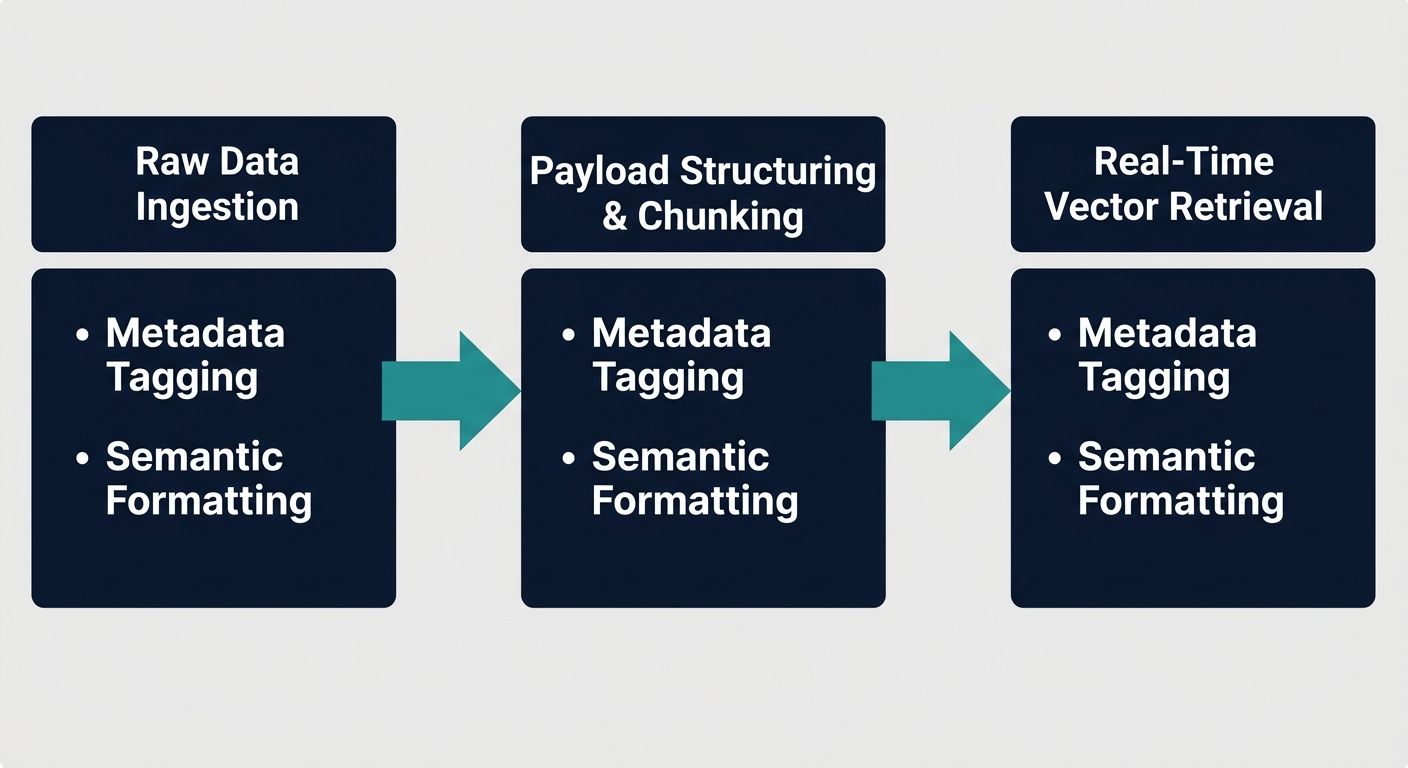
For developers and IT architects building or evaluating context-aware AI agents, the data payload structure is critical. Proper context engineering demands a meticulous approach to how contextual data is modeled, stored, and transmitted via APIs.
API Endpoints and Context Models
A dedicated real-time AI context engine should offer robust API documentation detailing exactly how context is injected and retrieved. The data model for context typically includes structured metadata (JSON objects detailing user ID, session ID, CRM tags) and unstructured semantic data (vector embeddings of past conversations). When designing request/response payloads, developers must ensure that the context engine can accept concurrent, high-frequency updates without locking the database.
- Context Injection Endpoints: Used to push new data (e.g., a CRM status update) into the agent's memory instantly.
- Context Retrieval Endpoints: Utilized by the LLM middleware to fetch the most relevant data shards via cosine similarity search in a vector database.
- State Management Webhooks: Triggered when an agent updates a user's preference, syncing the AI's internal state back to the enterprise CRM.
By standardizing these data payloads, enterprise developers can build highly scalable, modular context architectures that are decoupled from the underlying LLMs, allowing for seamless model upgrades without losing historical agent memory.
Evaluating AI Voice Agent Platforms by Context Mastery
When enterprise users look beyond superficial feature lists, the true differentiator between AI platforms is their context handling capabilities. A structured framework for evaluating these platforms should focus exclusively on how they manage the context lifecycle.
Key Evaluation Criteria for Enterprise Buyers
To accurately assess an AI agent platform's context engineering maturity, technical decision-makers should evaluate the following criteria:
- Depth of Context: Can the platform synthesize both structured CRM data and unstructured conversational history simultaneously?
- Voice-Specific Architecture: Does the platform possess specialized handling for STT/TTS latency, including interruption management and asynchronous context updating?
- API Extensibility: Are there clear integration blueprints for connecting the context engine to external data lakes and enterprise software ecosystems?
- Context Window Optimization: How does the system handle token eviction? Does it use basic First-In-First-Out (FIFO) methods, or advanced semantic compression?
- Quantifiable Performance Metrics: Can the platform guarantee sub-second latency even when querying massive contextual databases during a live voice call?
Platforms that merely offer a wrapper around basic LLM APIs will fail these tests. True enterprise solutions require a foundational architectural commitment to context management. To see how a fully optimized, AI-native context engine can revolutionize your sales automation workflows, you can Book a Demo with our enterprise specialists to explore advanced deployment strategies.
Best Practices for Implementing Context-Aware Sales Agents
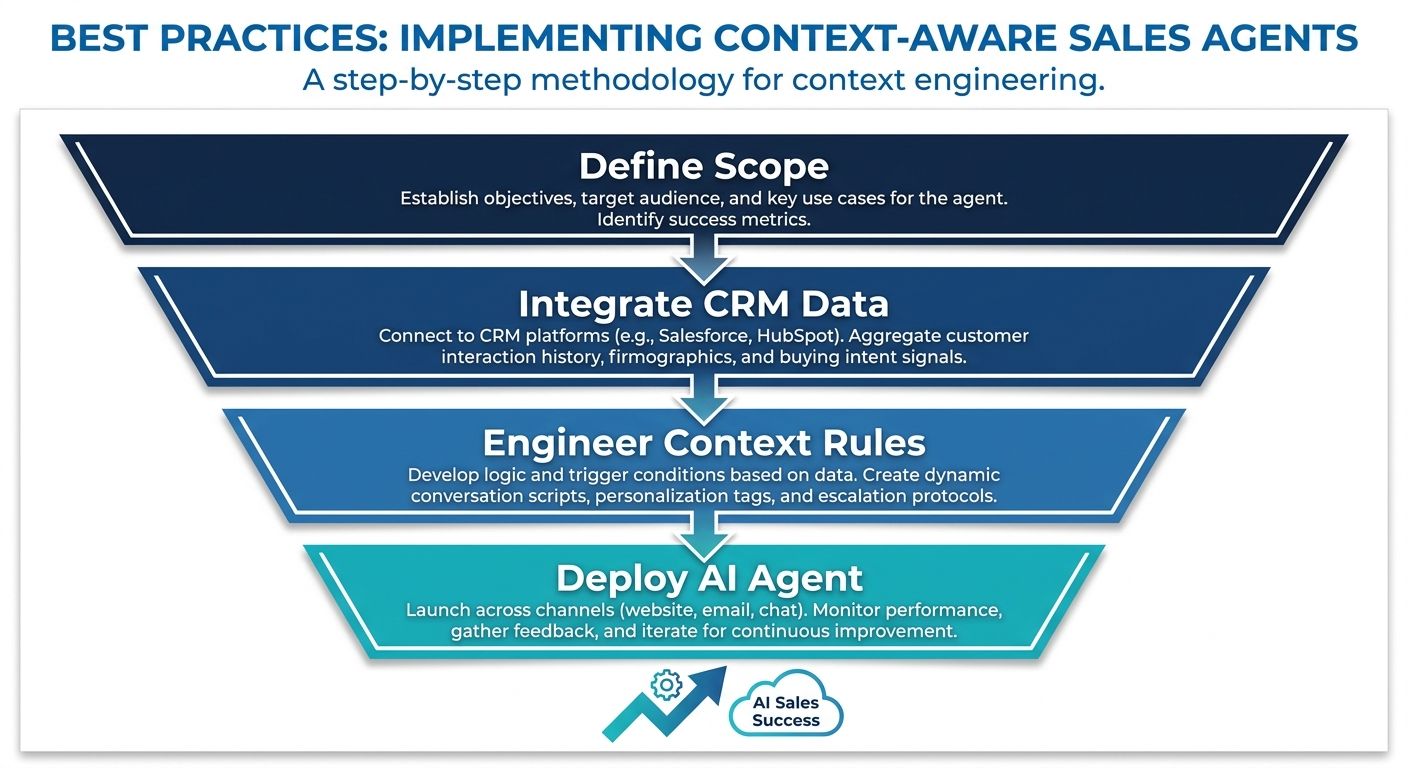
Implementing context engineering for AI agents within a GTM or sales automation framework requires a strategic approach. Sales agents are particularly demanding because they must handle objections, negotiate, and qualify leads—all tasks that rely heavily on nuanced, historical context.
Integrating with CRM and External Knowledge Bases
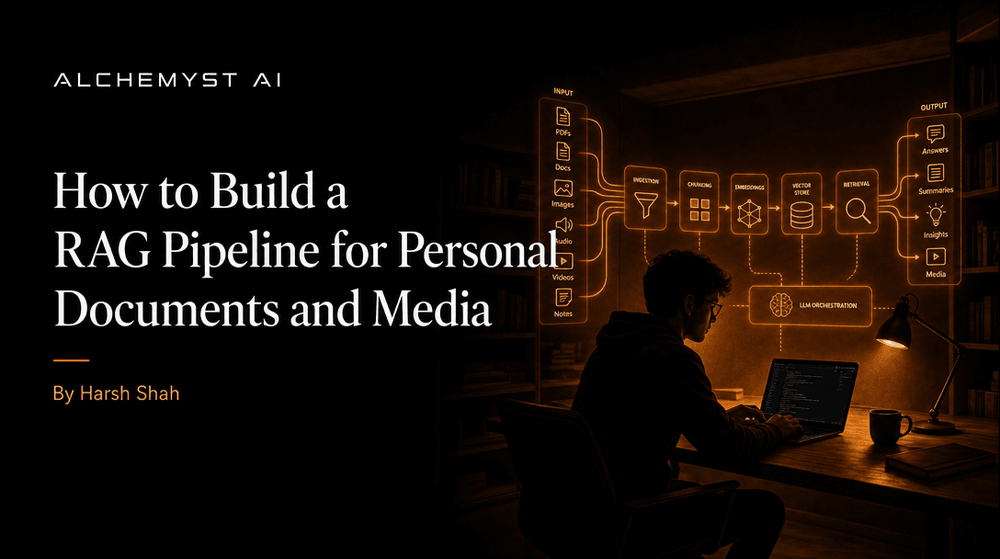
The most effective AI sales agents are deeply integrated with existing enterprise systems. Context engineering dictates that these agents should not only read from the CRM but actively write back to it, updating lead scores and logging conversational insights in real time. Implementing a robust Retrieval-Augmented Generation (RAG) system is essential here. The RAG architecture allows the AI agent to pull highly specific product specifications, competitor battle cards, and case studies into the context window precisely when the prospect mentions a specific pain point.
Continuous Context Refinement
Context engineering is not a set-it-and-forget-it endeavor. It requires continuous tuning. Enterprise teams should regularly audit their agent's conversational logs to identify instances where the context window was cluttered with irrelevant data, or conversely, where crucial context was missed. By adjusting the vector search thresholds and refining the memory compression prompts, teams can continuously improve the agent's accuracy and conversational fluidity.
The Future of Context Engineering in GTM Automation
As we look to the future, the scope of context engineering for AI agents will only expand. We are moving toward an era of multi-agent orchestration, where different AI specialists (a lead qualification agent, a technical product agent, a closing agent) must seamlessly hand off conversations to one another. This requires an ultra-sophisticated, shared context layer where the full history and nuance of the interaction are instantly transferred between agents without any loss of fidelity.
Furthermore, advancements in multimodal context—where an agent can process voice tone, video cues, and text data simultaneously—will require entirely new context arithmetic models. The enterprises that invest in robust, scalable context architectures today will be the ones positioned to dominate the automated GTM landscape of tomorrow.
Ultimately, the success of an AI agent is fundamentally dictated by its memory and situational awareness. By moving away from basic prompting and embracing the rigorous discipline of context engineering, businesses can deploy AI systems that don't just mimic conversation, but genuinely understand and drive enterprise value.
Ready to deploy enterprise-grade voice and text agents powered by sophisticated context engineering? Alchemyst AI delivers the advanced context management, memory persistence, and dynamic sales automation required to scale your GTM strategy.
Book a free demo