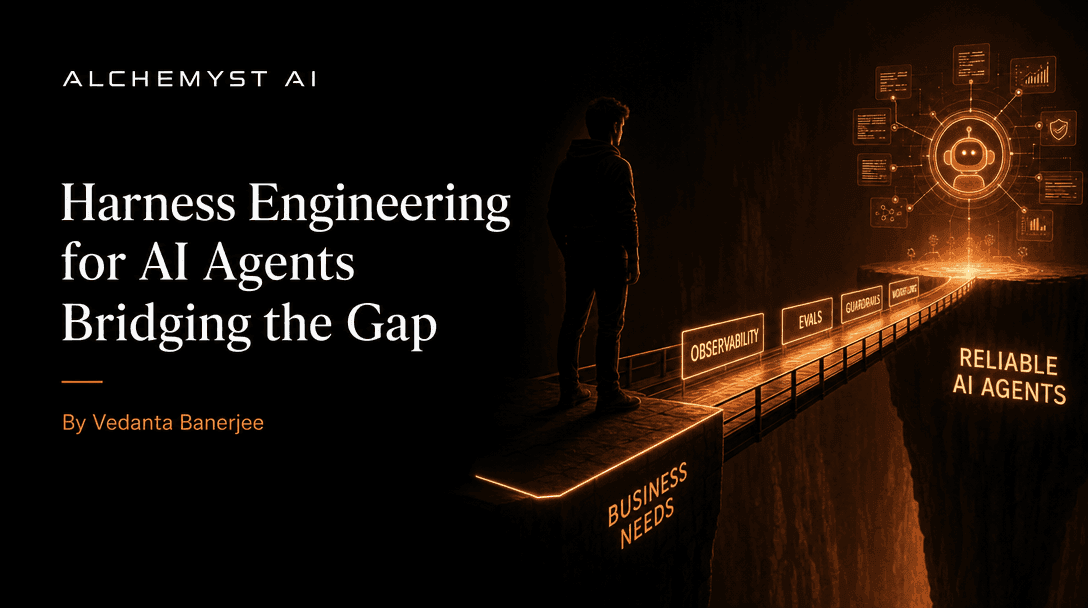

Introduction to Harness Engineering in the AI Era
In traditional software development, harness engineering refers to the creation of a software test harness—a collection of software and test data configured to systematically test a program unit by running it under varying conditions and monitoring its behavior. It acts as the protective and structural framework that ensures code operates reliably before it ever reaches a production environment. However, as enterprises rapidly adopt artificial intelligence, generative models, and autonomous agents, the definition and scope of harness engineering have fundamentally evolved.
Today, harness engineering is no longer just about asserting that a function returns a specific boolean value. It is about orchestrating complex MLOps pipelines, managing non-deterministic outputs from Large Language Models (LLMs), and ensuring that multi-modal data is properly ingested and processed. The shift from static code validation to dynamic AI behavior validation represents one of the most significant architectural leaps in modern software engineering.
When building enterprise-grade AI agents, a robust test harness is the only reliable way to bridge the notorious "demo-to-production gap." While building a proof-of-concept AI chatbot or voice agent can take mere hours, deploying it securely to thousands of users requires a resilient infrastructure. This is where modern harness engineering comes in, providing the necessary boundaries, context management, and semantic validation to ensure AI systems act predictably, safely, and efficiently in real-world scenarios.
The Anatomy of a Software Test Harness
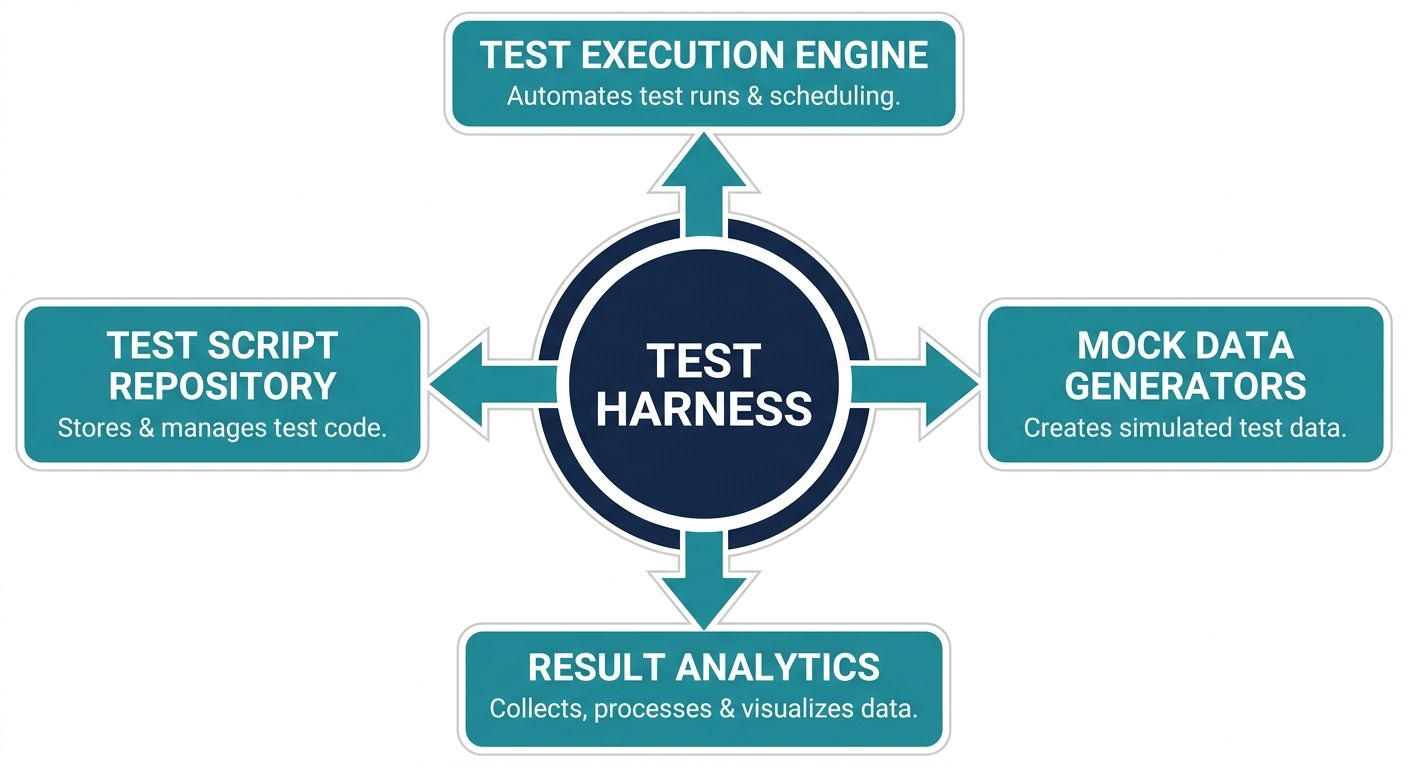
Before diving into AI-specific challenges, it is essential to understand the foundational anatomy of a software test harness. A traditional harness consists of several interconnected components designed to automate testing and provide actionable feedback to developers.
The Test Execution Engine
At the core of the harness is the execution engine. This component is responsible for orchestrating the test suites, scheduling runs, and managing the lifecycle of the test environment. It initializes the system state, injects the necessary mock data, executes the target application, and captures the resulting outputs. In high-performance environments, the execution engine must support parallel processing and distributed testing to minimize deployment bottlenecks.
Test Script Repository and Data Injection
The repository houses all automated test scripts, parameters, and configuration files. Effective harness engineering separates the test logic from the test data. This separation allows engineers to inject diverse datasets into the same test script, verifying how the application handles edge cases, null values, and massive data loads. For AI applications, this data repository becomes increasingly complex, often requiring vectors, embeddings, and complex conversational histories rather than simple tabular data.
Result Analytics and Reporting
A harness is only as useful as the insights it generates. The reporting module captures logs, traces, and metrics during execution. It compares actual outputs against expected outcomes and flags anomalies. Modern reporting systems integrate directly into Continuous Integration/Continuous Deployment (CI/CD) pipelines, automatically blocking deployments if critical performance thresholds—such as high latency or high error rates—are breached.
Why AI Demands a New Approach to Harness Engineering
Integrating generative AI into software ecosystems breaks traditional testing methodologies. Unlike deterministic algorithms where input A always equals output B, LLMs are probabilistic. They can generate slightly different, yet technically correct, responses to the exact same prompt. This non-determinism renders standard exact-match assertions useless, necessitating a new era of AI harness engineering.
Bridging the Demo-to-Production Gap
The current AI landscape is littered with projects that looked incredible in a controlled demo environment but failed catastrophically in production. This "demo-to-production gap" occurs because developers often underestimate the fragility of AI agents. In production, AI systems face prompt injection attacks, context window limits, API latency, and unpredictable user behavior. AI harness engineering addresses these issues by simulating chaotic production environments during the development phase. By actively stressing the system with adversarial prompts and testing the limits of memory infrastructure, engineers can fortify their AI agents before deployment.
Challenges in Multi-Modal AI and RAG Pipelines
Modern AI is rarely limited to simple text generation. Enterprises are building multi-modal systems that process images, audio, video, and massive document repositories using Retrieval-Augmented Generation (RAG). Harness engineering for RAG pipelines requires validating not just the final output, but the entire retrieval mechanism. The harness must test whether the correct documents were retrieved, whether the semantic search yielded highly relevant chunks, and whether the final generation accurately synthesized that retrieved data without hallucinating.
Architecting an AI Test Harness for Enterprise MLOps
Building a test harness for AI requires specialized MLOps tooling and a shift in architectural philosophy. The harness must be able to evaluate semantic similarity, maintain conversational context, and mock external API dependencies effectively.
Mocking External Dependencies and APIs
AI agents often rely on a web of external tools, from CRM systems to payment gateways. During testing, making live API calls can be expensive, slow, and dangerous. A robust AI test harness incorporates advanced mocking frameworks that simulate these external dependencies. This ensures that the agent's decision-making process can be tested in isolation. For instance, if an AI sales agent decides to book a meeting, the harness should intercept that function call, validate the payload, and return a mock success response, all without touching the live calendar API.
Context Engineering and State Management
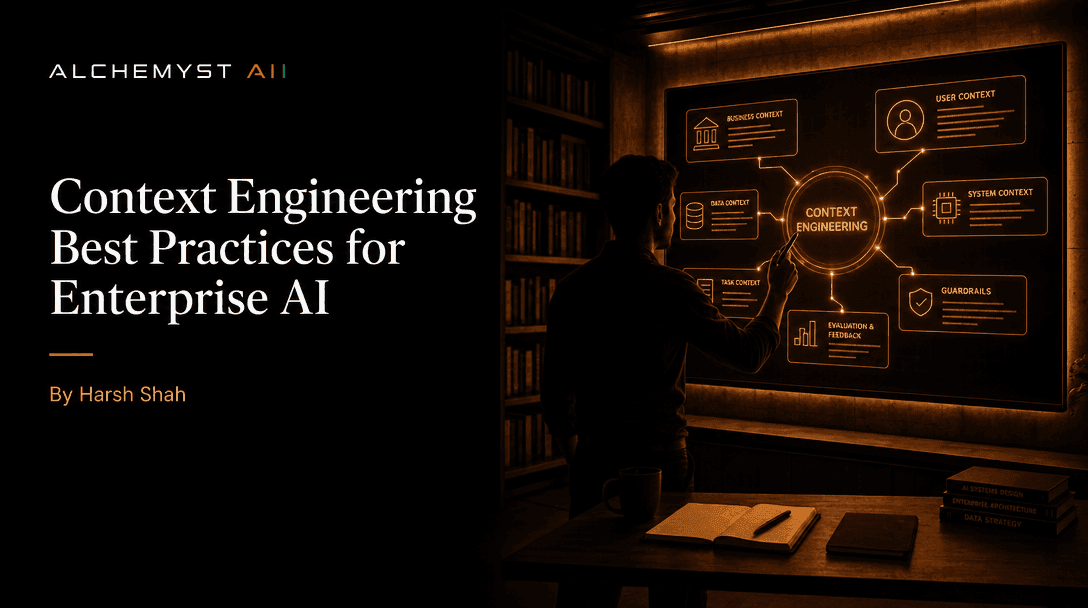
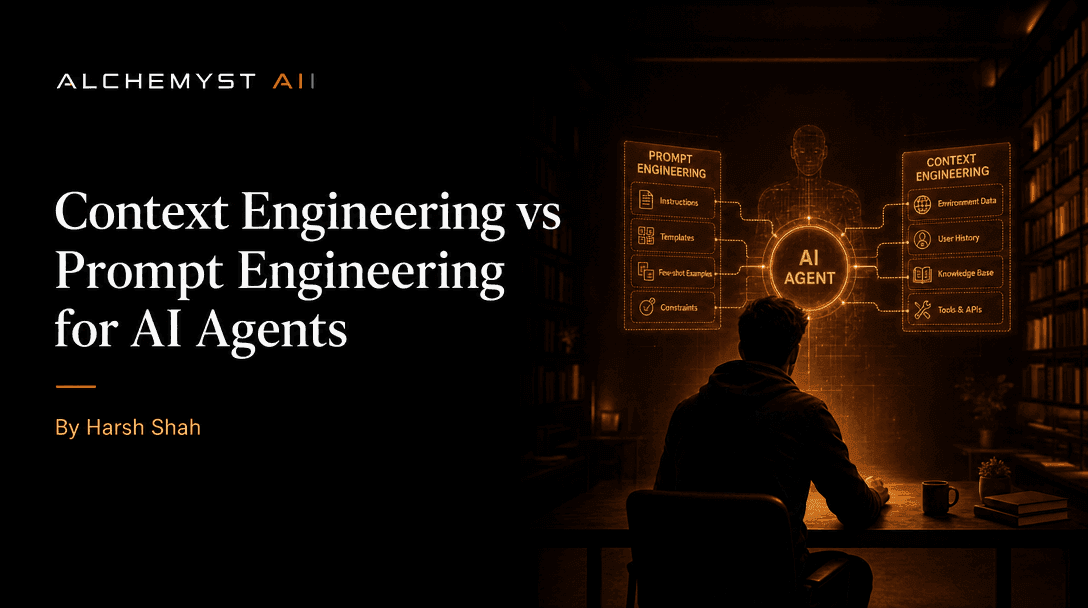
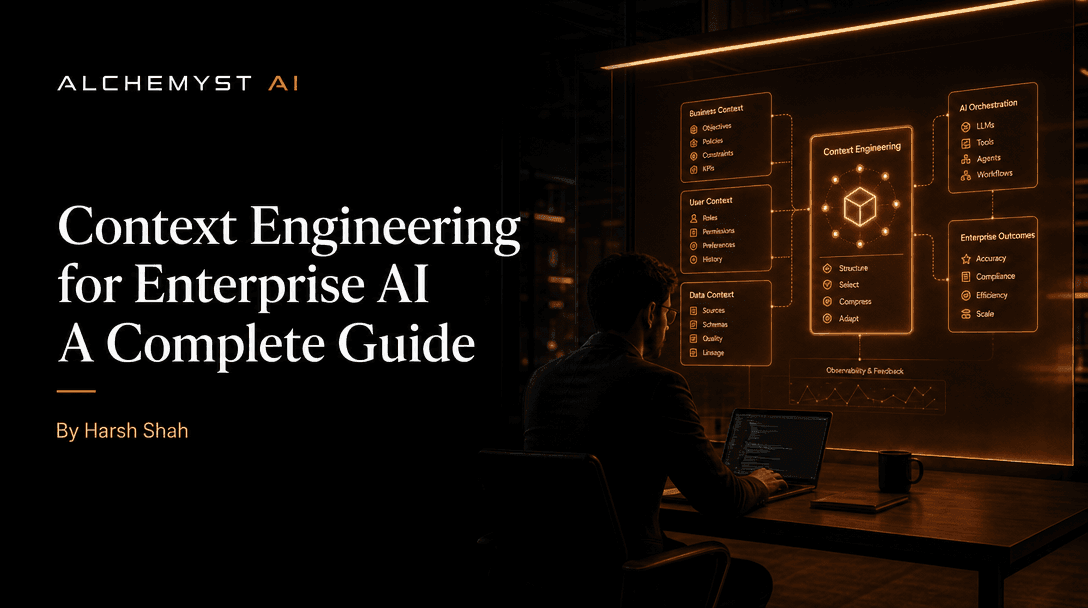
One of the most critical and frequently overlooked aspects of AI deployment is context engineering. How does an AI agent remember what happened three turns ago? How does it persist state across multiple sessions? Harness engineering must validate the underlying memory infrastructure. Tests must simulate long-running conversations, abruptly disconnecting and reconnecting sessions to ensure the agent seamlessly picks up where it left off.
To handle the complexities of memory and conversational state, Alchemyst AI provides an industry-leading AI-Native Context Management solution. Featuring advanced summarization limits and customizable enterprise-grade memory architecture, Alchemyst AI ensures that multi-turn interactions remain accurate, coherent, and highly contextual. This built-in memory compression engine empowers developers to build and test context-aware agents without having to engineer complex persistence layers from scratch.
Core Components of an AI-Ready Harness
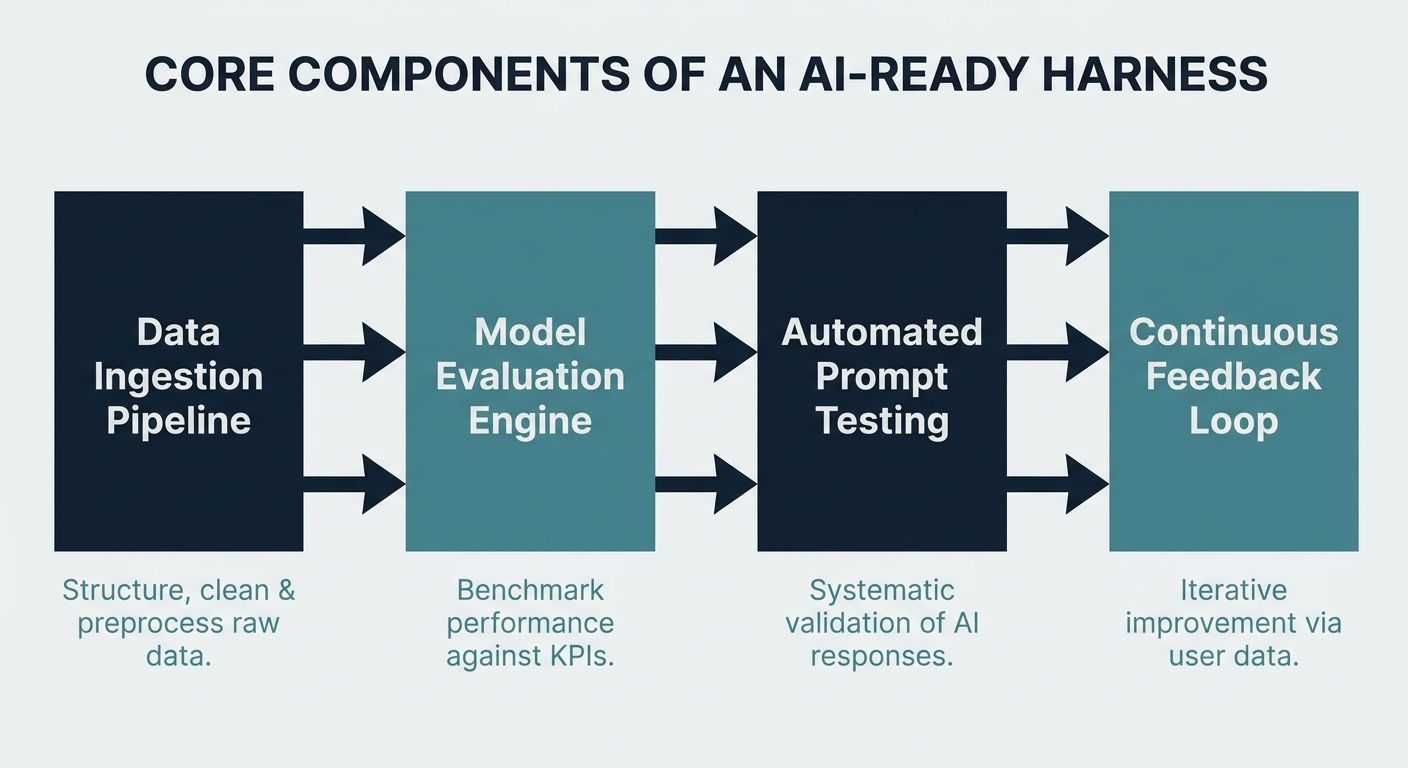
To effectively validate AI systems, the test harness must incorporate several specialized modules designed specifically for machine learning and natural language processing workflows.
Data Ingestion and Semantic Validation
Because AI outputs are non-deterministic, the harness must use semantic validation rather than string matching. This involves using "evaluator models"—smaller, faster LLMs tasked with judging the output of the primary AI agent. The harness uses these evaluator models to grade responses on metrics like relevance, tone, factual accuracy, and safety. This "LLM-as-a-judge" paradigm is a cornerstone of modern AI harness engineering.
Memory Infrastructure and Persistence Testing
Evaluating an AI agent's memory requires injecting historical context into the test environment. The harness should simulate a user returning after a week, testing whether the AI successfully accesses its drop-in memory infrastructure to recall previous preferences. The harness must validate both short-term memory (within the active context window) and long-term memory (persisted in vector databases or external storage).
Continuous Integration and Continuous Deployment (CI/CD) for AI
AI models and prompts are constantly evolving. A highly optimized harness integrates into CI/CD pipelines to facilitate Continuous Evaluation. Every time a prompt is tweaked, a RAG configuration is updated, or a new model weight is deployed, the harness automatically triggers a suite of regression tests. This prevents "prompt drift," where optimizing a prompt for one specific use case accidentally degrades performance in another.
Overcoming Common Bottlenecks in AI Harness Engineering
Implementing an AI test harness is not without its hurdles. Enterprises face unique bottlenecks when trying to scale these environments, particularly when dealing with real-time voice processing and dynamic resource allocation.
Handling Conversational Context in Voice AI
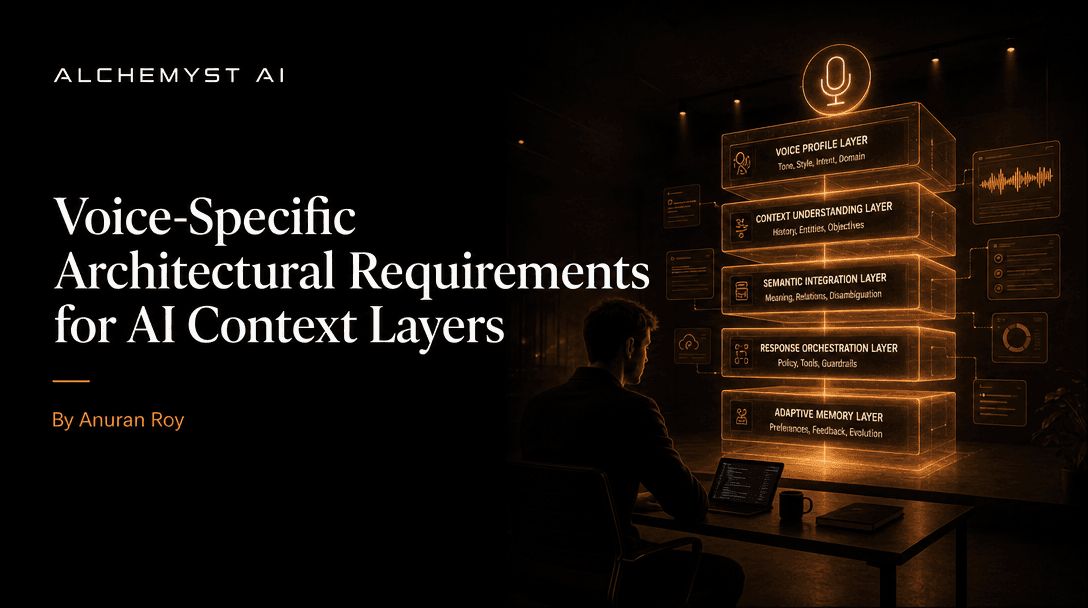
Voice AI introduces a layer of complexity far beyond text-based chatbots. Latency is the enemy of voice agents; a delay of even 500 milliseconds can ruin the conversational flow. Harness engineering for voice AI must rigorously test the integration points between Speech-to-Text (STT), the core LLM reasoning engine, and Text-to-Speech (TTS) services. The harness must simulate network degradation, background noise, and user interruptions (barge-in capabilities) to ensure the agent handles real-world audio conditions gracefully.
When deploying these complex architectures, utilizing a platform that inherently understands voice dynamics is essential. Platforms like Alchemyst AI focus deeply on context handling methodologies, offering the Kathan engine to bridge the gap between underlying LLM reasoning and real-time voice execution. By offloading context management to a specialized platform, engineering teams can focus their harness testing on unique business logic rather than foundational infrastructure.
Dynamic Scaling and Resource Allocation
Executing hundreds of automated tests against large language models is computationally expensive. API rate limits and GPU availability can quickly bottleneck the testing process. An intelligent test harness mitigates this by utilizing request batching, caching previously generated responses, and dynamically scaling test runners across serverless cloud environments. Cost monitoring is also a crucial feature; the harness must track token usage during testing to prevent development costs from spiraling out of control.
Harness Engineering for Go-To-Market (GTM) Automation
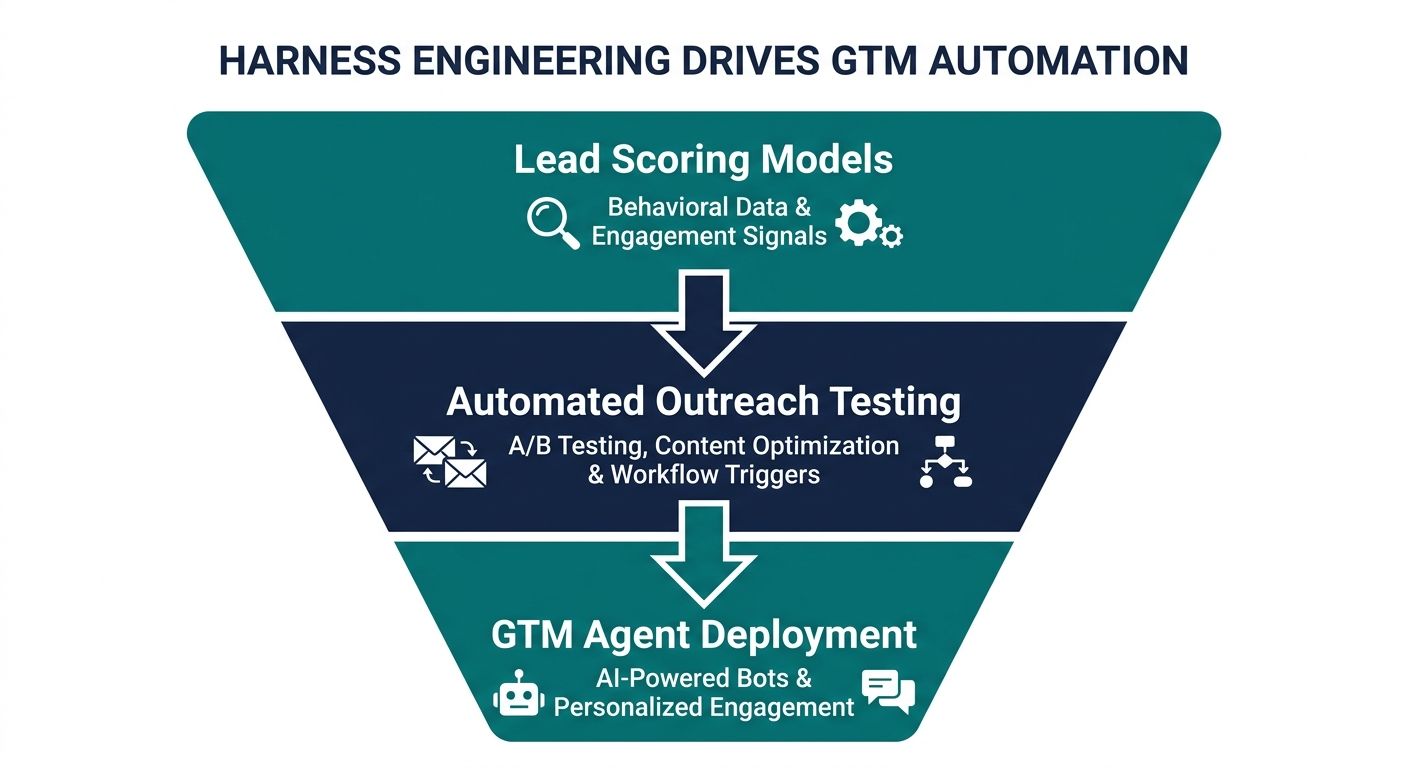
The application of AI in Go-To-Market and sales automation requires the highest level of reliability. When AI agents interact directly with prospects, draft outreach emails, or qualify leads, a hallucination can result in lost revenue and brand damage. Harness engineering provides the safety net required to automate these revenue-critical functions.
In GTM automation, test harnesses simulate complex sales funnels. They inject mock lead data, simulate various prospect personas, and evaluate how the AI agent personalizes its outreach. The harness ensures that the agent strictly adheres to the company's brand voice, handles objections correctly, and routes highly qualified leads to human representatives without fail. By rigorously testing these pathways, businesses can confidently deploy AI to scale their sales operations.
Best Practices for Implementing AI Harnesses
To maximize the return on investment in harness engineering, technical teams should adhere to several industry best practices that promote scalability, maintainability, and security.
Modular Architecture Design
Design the test harness with modularity in mind. The components responsible for API mocking, prompt management, and semantic validation should be decoupled. This allows teams to swap out underlying models—for example, upgrading from GPT-4 to a newer iteration or switching to an open-source model—without needing to rewrite the entire testing infrastructure.
Comprehensive Logging and Tracing
When an AI agent fails a test, engineers need to know exactly why. The harness must provide comprehensive tracing of the "chain of thought." It should log the exact user input, the retrieved context from the vector database, the final compiled prompt sent to the LLM, and the raw output. This granular visibility is critical for debugging complex RAG applications.
Security and Data Privacy Controls
AI test environments often require access to sensitive enterprise data to run realistic tests. Harness engineering must incorporate strict data anonymization and masking protocols. Test data should be synthesized or stripped of Personally Identifiable Information (PII) before being processed by external LLM APIs, ensuring strict compliance with GDPR, SOC2, and other regulatory frameworks.
The Future of Harness Engineering
As AI agents become more autonomous, the test harnesses designed to evaluate them will also become smarter. We are moving toward an era of self-healing test environments, where the harness itself uses AI to dynamically generate new test cases based on emerging edge cases detected in production. Autonomous agent validation will evolve from static, predefined scripts into dynamic, adversarial "red-teaming" simulations, where a secondary AI actively tries to break the primary AI agent.
Ultimately, harness engineering is the foundation upon which trust in AI is built. Without it, enterprise AI is a gamble. With it, AI becomes a predictable, scalable, and immensely powerful driver of business growth.
Ready to bridge the demo-to-production gap and deploy reliable, context-aware AI agents for your enterprise? Transform your Go-To-Market strategy with robust automation, AI-native memory infrastructure, and unparalleled contextual intelligence.
Learn more about Alchemyst AI