
The Evolution of Context Engineering in Modern AI
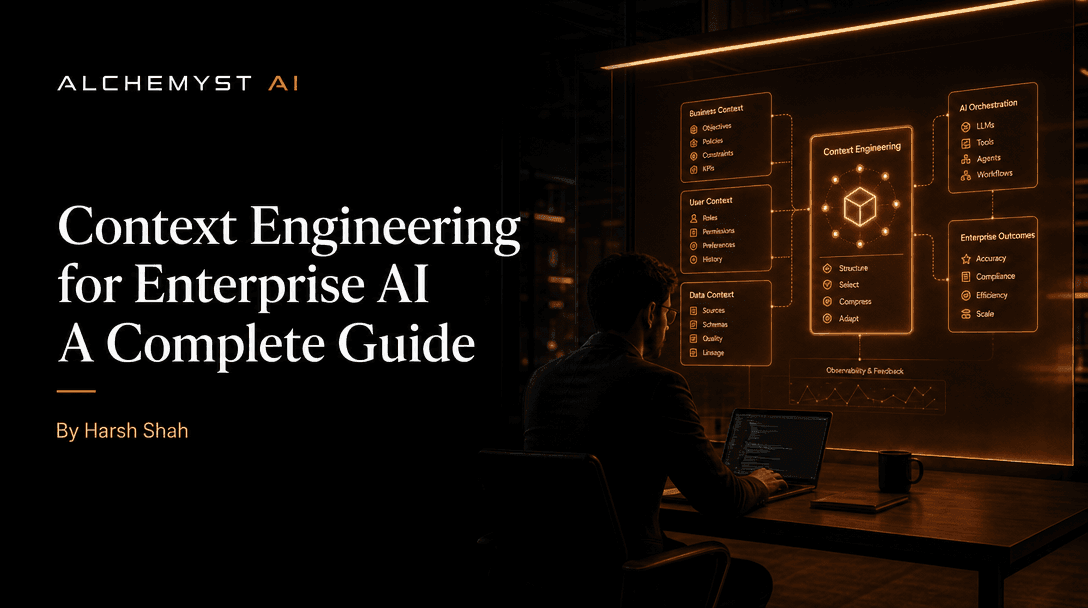
As enterprise artificial intelligence rapidly matures from basic conversational bots into highly sophisticated, multi-agent systems, the rules of engagement have fundamentally shifted. Simple prompt engineering is no longer sufficient to maintain coherent, goal-oriented dialogues in enterprise applications. Enter context engineering - the systematic discipline of structuring, managing, and injecting relevant contextual data into AI models to ensure accurate, consistent, and highly personalized outputs. Understanding and implementing context engineering best practices is now the primary differentiator between clunky chatbots and seamless, human-like voice AI agents.
Context engineering goes beyond merely passing a user's previous message back to a Large Language Model (LLM). For complex Go-To-Market (GTM) and sales automation workflows, context management requires architectural foresight. It involves dynamically assembling semantic memory, retrieving real-time CRM data, prioritizing dialogue states, and pruning redundant tokens to optimize latency and cost. When applied correctly, these context engineering best practices allow conversational AI platforms to handle nuanced human interactions, such as sudden topic shifts, multi-turn ambiguity, and complex problem-solving scenarios.
Why Traditional Context Management Fails in Conversational AI
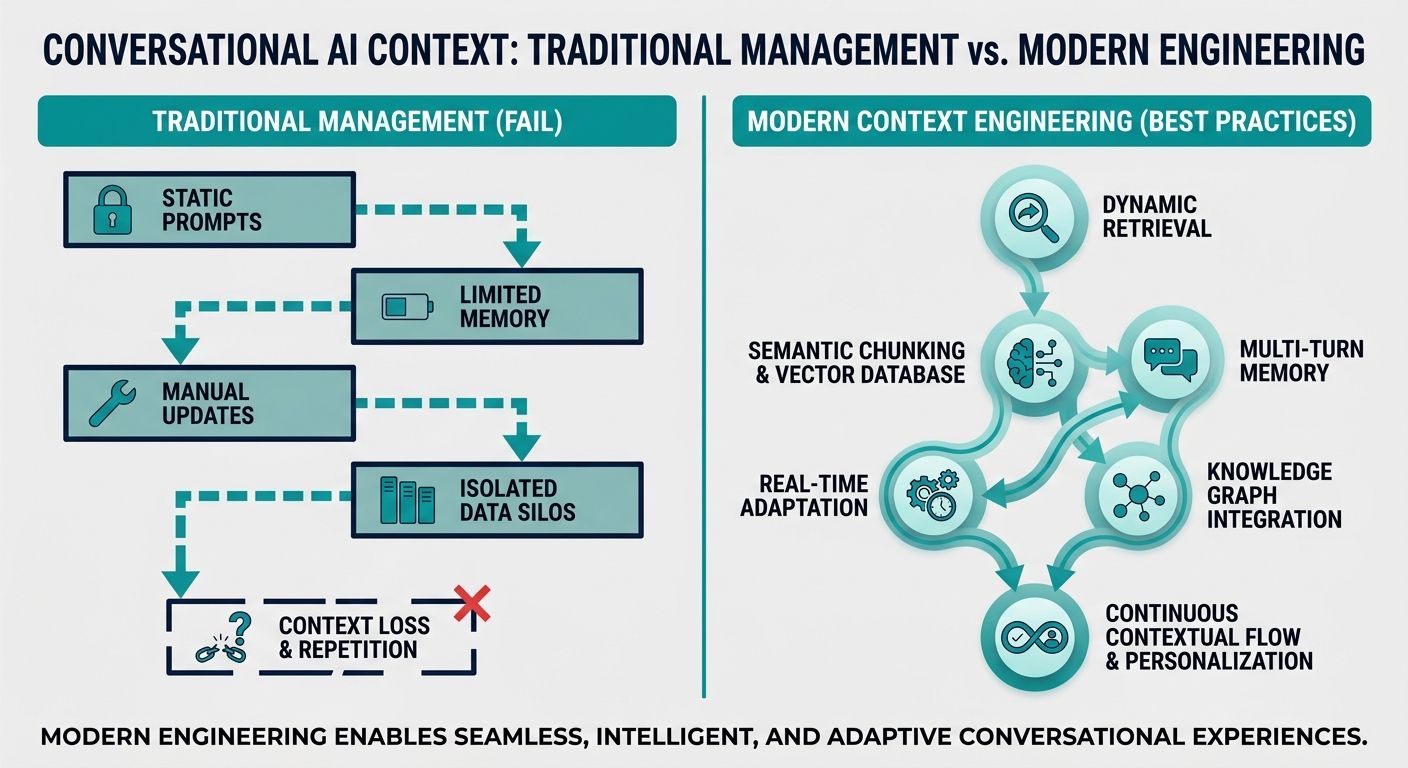
Many early AI implementations relied on naive context window stuffing, appending the entire chat history to every API request until the model's token limit was breached. This approach is fundamentally flawed for several reasons. First, it scales terribly in terms of cost. Model inference costs are typically calculated per token; sending thousands of irrelevant tokens for a simple query is an immense waste of enterprise resources. Second, it degrades model performance. Research indicates that LLMs suffer from the "lost in the middle" phenomenon, where they struggle to retrieve accurate information buried deep within a massive context window.
Third, traditional context management completely fails in real-time conversational environments, particularly voice AI. Voice interactions are messy. Users interrupt the AI, use filler words, backtrack on previous statements, or introduce entirely out-of-scope requests. A static array of previous messages cannot represent the true state of a fluid conversation. To solve this, developers must transition from passive history tracking to active context engineering. For instance, leveraging an AI-Native Context Management solution like Alchemyst AI enables engineering teams to build dynamic, scalable systems that summarize, filter, and inject context precisely when it is needed most.
Core Context Engineering Best Practices
1. Implementing Semantic Memory and Retrieval-Augmented Generation (RAG)
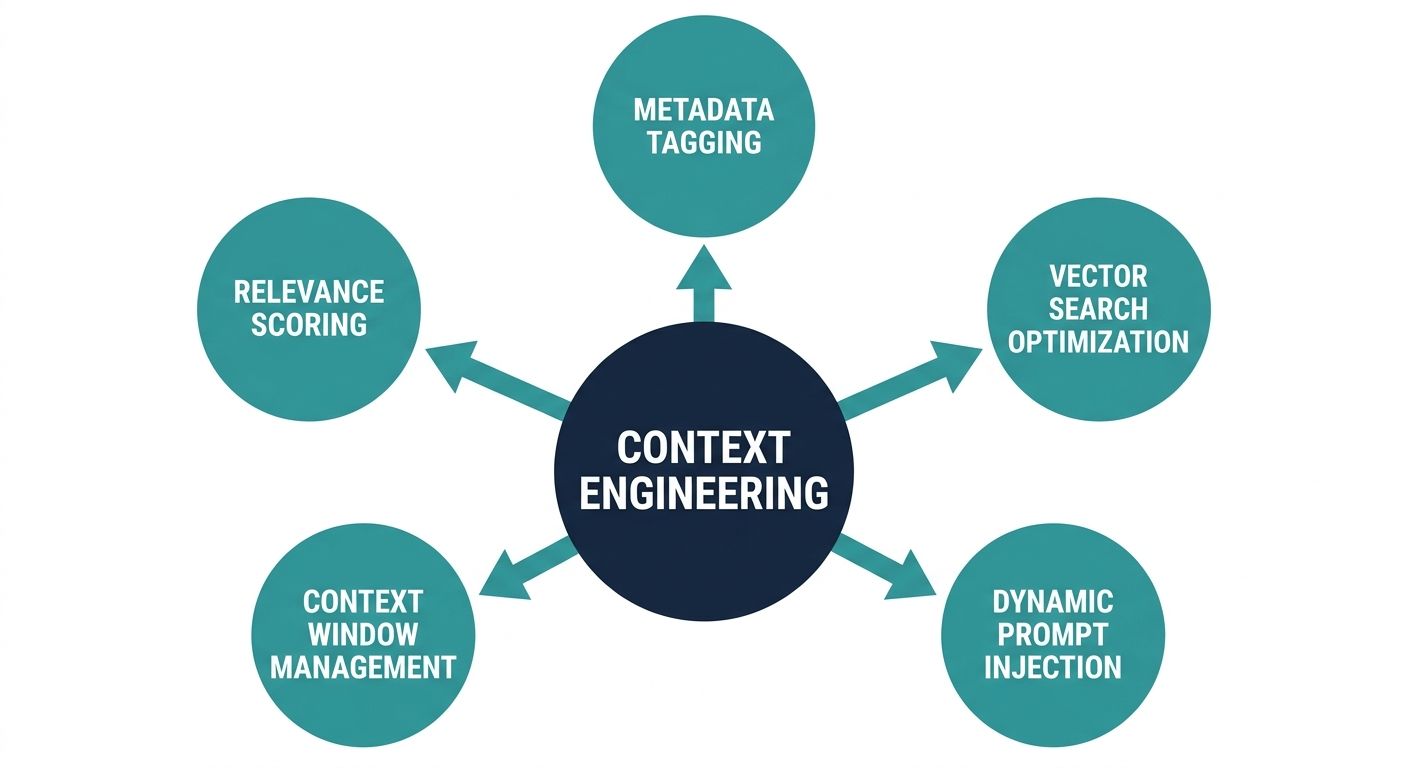
To overcome the limitations of finite context windows, conversational AI must decouple its memory from the model's immediate input space. Implementing a robust Retrieval-Augmented Generation (RAG) pipeline is one of the most critical context engineering best practices. Instead of passing the entire dialogue history, the system should chunk past interactions and domain knowledge into semantic vectors, storing them in a high-performance vector database.
When a user issues a new prompt, the context engine queries the vector database for mathematically similar concepts and injects only the top-k most relevant chunks into the prompt. Advanced implementations go a step further by utilizing hybrid search (combining dense vector embeddings with sparse keyword search) and dynamic reranking to ensure that the retrieved context is both contextually relevant and chronologically appropriate. By segregating short-term memory (the last 3-5 conversational turns) from long-term memory (RAG-based semantic retrieval), developers can maintain hyper-focused dialogue context without sacrificing historical awareness.
2. Managing Complex Dialogue Flows and User Interruptions
In real-world enterprise applications, particularly voice AI agents deployed for sales automation or customer support, conversations rarely follow a linear script. Users frequently "barge in" (interrupt the agent mid-sentence), change their minds, or ask sudden tangential questions. Handling these disruptions requires a sophisticated state machine integrated with your context engine.
Best practices dictate that context should be managed as a dynamic state object rather than a flat string. When a user interrupts, the AI must instantly capture the timestamp and semantic intent of the interruption, rollback the unfulfilled portion of its previous response, and update the dialogue state. The context payload should explicitly flag the interruption event so the LLM understands why the conversational flow was broken. Structuring context to include explicit dialogue states (e.g., "Awaiting User Confirmation," "Handling Tangent," "Resolving Objection") empowers the model to navigate interruptions smoothly and guide the user back to the primary GTM objective.
3. Handling Ambiguity and Out-of-Scope Requests
Human conversation is inherently ambiguous. A user might say, "Apply it to the second one," leaving the AI to deduce what "it" and "the second one" refer to. Effective context engineering resolves ambiguity through entity resolution and coreference tracking. Before the final prompt is constructed, a lightweight preprocessing model or logic layer should map pronouns and ambiguous terms to explicitly defined entities stored in the short-term context buffer.
When an out-of-scope request occurs, context engineering dictates how the AI should fallback gracefully. Rather than generating a hallucinated response or abruptly ending the conversation, the context engine should inject a specific "boundary protocol" into the prompt. This protocol instructs the LLM to acknowledge the request, explain its operational boundaries based on its injected persona, and pivot the conversation back to the known context space. This keeps the user engaged while maintaining the guardrails necessary for enterprise AI deployments.
4. Optimizing Context Windows for Cost and Latency
Latency is the enemy of conversational AI. In text-based chat, a three-second delay is annoying; in real-time voice AI, a three-second delay completely shatters the illusion of human interaction. Therefore, optimizing the context window is a mandatory best practice for engineering teams. This involves aggressive token pruning and context summarization.
Instead of retaining verbatim transcripts of long interactions, systems should periodically summarize older turns. When the short-term memory buffer exceeds a predefined threshold (e.g., 1,500 tokens), the context engine triggers a background process to synthesize the dialogue into a condensed summary, which is then stored in the long-term semantic memory. This ensures the active context window remains lean, fast, and cost-effective. This is an area where Alchemyst AI excels by providing seamless contextual alignment and automated transcript distillation.
Through its advanced capabilities, Alchemyst AI offers robust features such as custom AI models and sophisticated AI summarization that automatically distill long-form audio transcripts into structured context. This ensures that context engineering teams can seamlessly manage high-volume sales interactions without hitting token limits, driving unparalleled efficiency for GTM strategies.
Advanced Architectural Blueprints for Voice AI Agents
Structuring the Context Payload API
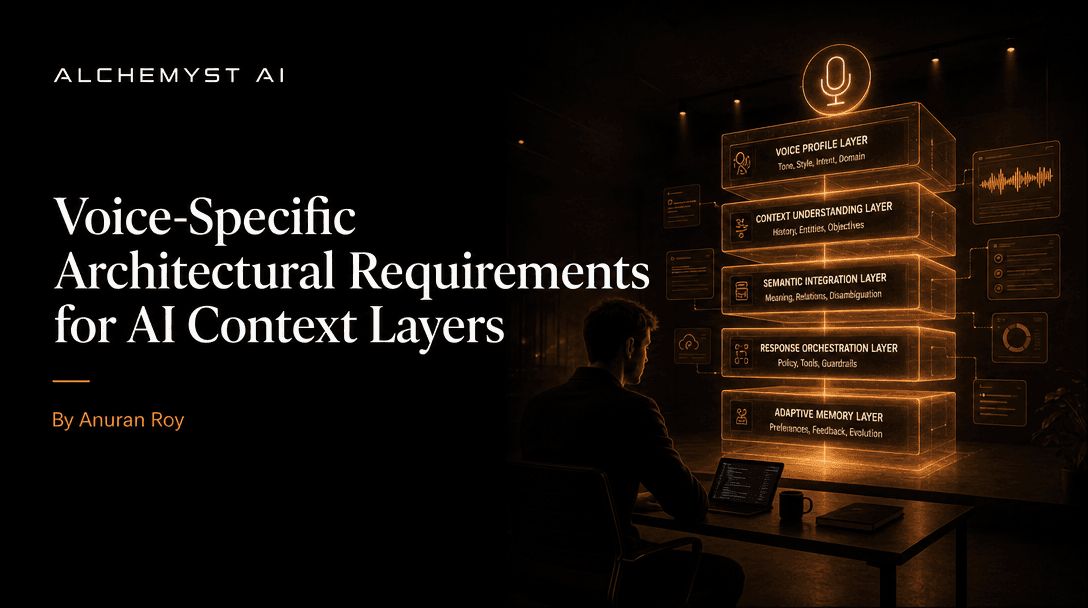
For engineering teams building real-time context layers, the structure of the API payload is paramount. A monolithic string of text is an anti-pattern. Instead, the context engine should construct and deliver a highly structured JSON payload to the LLM. A best-in-class architectural blueprint separates the context into distinct, immutable tiers.
- System Directives: The unalterable base prompt defining the agent's persona, constraints, and GTM objectives.
- Environmental Context: Real-time metadata such as the user's current location, time of day, device type, and active CRM profile data.
- Short-Term Memory: The immediate verbatim history of the last few conversational turns, clearly demarcated by speaker roles (User vs. Agent).
- Retrieved Context (RAG): The highly relevant data chunks pulled from the semantic database to answer the specific query at hand.
By enforcing this strict schema, developers guarantee that the LLM weights the instructions appropriately, heavily prioritizing the System Directives while using the Retrieved Context strictly as informational grounding.
Integration with LangChain and LlamaIndex
When orchestrating these context layers, frameworks like LangChain and LlamaIndex provide excellent scaffolding. Best practices involve utilizing specialized memory modules within these frameworks. For example, rather than using LangChain's basic `ConversationBufferMemory`, enterprise teams should implement `ConversationSummaryBufferMemory`. This module keeps a buffer of recent interactions in memory, but rather than just flushing old interactions, it compiles them into a rolling summary.
When working with voice AI, this must be coupled with asynchronous retrieval. The moment a user begins speaking, the transcription stream (often using WebSockets) should trigger predictive context retrieval in the background. By the time the user finishes their sentence, the vector database has already fetched the necessary CRM data and injected it into the prompt template, drastically reducing the time-to-first-byte (TTFB) of the AI's response.
Measuring Context Engineering Effectiveness
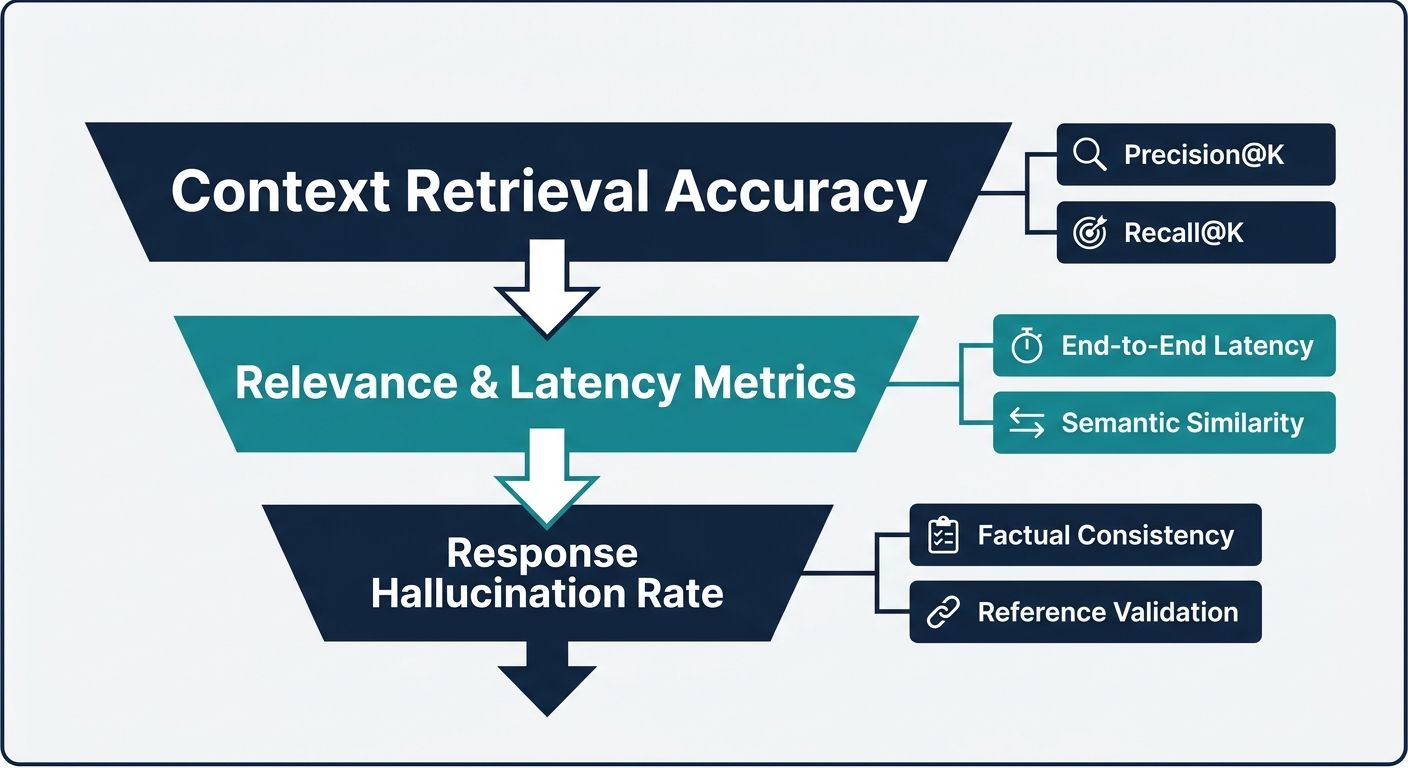
Implementing context engineering best practices is only half the battle; enterprise teams must rigorously measure their effectiveness. Traditional software metrics like uptime and API response times are insufficient for evaluating conversational nuance. Instead, teams should monitor specific AI context metrics to gauge performance.
Goal Completion Rate (GCR): This measures how often the AI successfully navigates a user from an initial query to a desired business outcome (e.g., booking a sales meeting). A high GCR indicates that the context engine is successfully maintaining the dialogue state and keeping the AI focused on its objective, despite user tangents.
Context Retention Accuracy (CRA): This metric evaluates whether the AI accurately recalls information provided earlier in the conversation or retrieved from the RAG pipeline. If a user states their budget in turn 2, and the AI suggests a product outside that budget in turn 15, the CRA is low, indicating a failure in the memory summarization or retrieval architecture.
Latency vs. Token Volume: Continuous monitoring of token usage per interaction against the resulting latency is crucial. If latency spikes as the conversation deepens, the context pruning algorithms are likely failing. Engineering teams must establish tight latency budgets (e.g., <800ms for voice AI) and dynamically adjust the context window size to ensure the AI remains responsive under load.
Conclusion: The Future of Context-Aware AI
The transition from static chatbots to dynamic, context-aware voice agents represents a massive leap in enterprise automation. By adopting strict context engineering best practices - such as implementing robust RAG pipelines, managing asynchronous dialogue states, handling interruptions gracefully, and structuring modular API payloads - developers can build systems that truly understand and adapt to human nuance. As Go-To-Market strategies increasingly rely on automated, personalized outreach, mastering the context layer will be the defining factor in determining which AI platforms drive genuine business value and which merely generate conversational noise.
Ready to transform your sales automation and contextual AI workflows with an enterprise-grade solution?