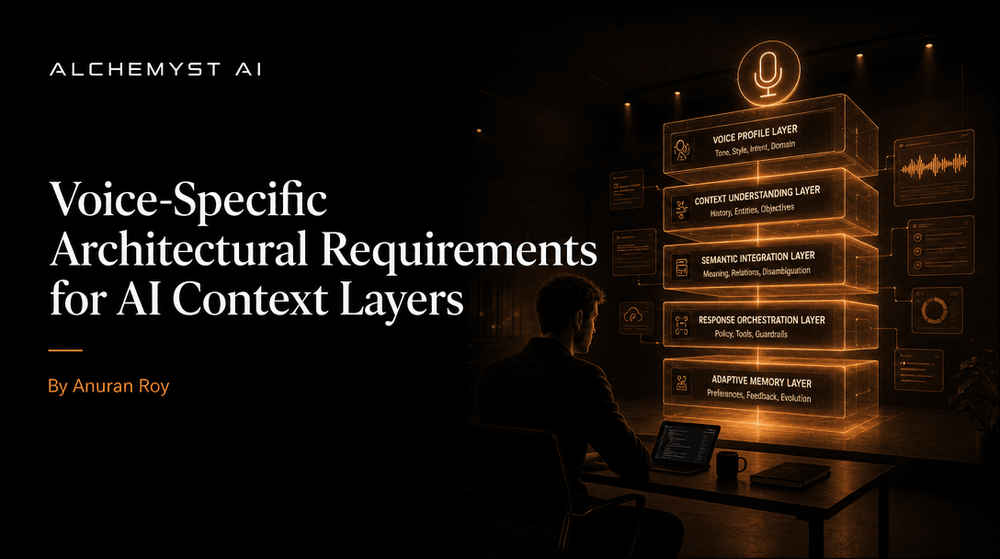
Most outbound voice AI campaigns in India connect on 8–15% of dials. Vendors blame the lead list, the time of day, or the carrier. Rarely do they blame the agent itself. But with over 500,000+ calls deployed daily, our data tells a different story — the root cause is simpler than most teams realize. This is a challenge we embraced while building Kathan, our enterprise voice OS. Built in India, for the world.
The 15% Ceiling Is a Context Problem
When a voice agent dials a number it has called before, it should know that. It should know the person's preferred language. It should know whether the last call ended in a rejection, a callback request, or a voicemail. Most agents don't carry any of this information. They treat every dial as the first dial — and the person on the other end can tell within five seconds.
This is the fundamental architectural flaw of stateless voice AI. The agent is technically capable of natural conversation, but it opens every call with a generic greeting that signals "I have no idea who you are." The prospect hangs up. Connection rate: 12%.
What Kathan's Data Shows
Deployments with two major education clients — JK Shah Classes for enrollment and Unacademy for NPS feedback — told a clear story. While the use cases differed, the core lesson was the same: context drives connection.
| Campaign Type | Connection Rate | Success Rate |
|---|---|---|
| Industry average (cold) | 12–15% | 3–5% |
| JK Shah Classes (first-attempt) | 38.7% | 14.4% |
| Unacademy (NPS feedback) | 35.2% | 22.1% |
| JK Shah Classes (retarget, all) | 42.7% | 21.3% |
| JK Shah Classes (retarget, Gujarat) | 57.3% | 29.5% |
The JK Shah campaigns, focused on student enrollment, connected at 38.7% on first attempts — already 2.5x the industry average. But the real breakthrough came on retargeted campaigns, where Alchemyst's Kathan engine carried context from prior interactions. Gujarat retargets hit 57.3% connection rates.
Similarly, Unacademy's NPS feedback campaign saw its own peaks. While the overall connection rate was a strong 35.2%, Campaign 1, targeting the freshest leads, achieved a 45.5% connection rate. This mirrors the pattern seen with JK Shah: the more relevant and timely the context, the higher the likelihood of a successful connection.
57.3%
Connection rate on retargeted leads in Gujarat — 4x the industry average
What the Kathan Agent "Knew" on a Retargeted Call
On a retargeted call, the Kathan agent didn't start from zero. Before dialing, the context engine retrieved and assembled:
| Context Signal | Source | Impact on Call |
|---|---|---|
| Prior campaign name | Campaign metadata | Agent references the right course/program |
| Language preference | Prior call detection | Agent opens in Gujarati, not English |
| Last objection | Semantic search over logs | Agent addresses 'too expensive' directly |
| Course interest | CRM + prior conversation | Agent skips discovery, goes to enrollment |
| Callback preference | Interaction history | Agent calls at the preferred time |
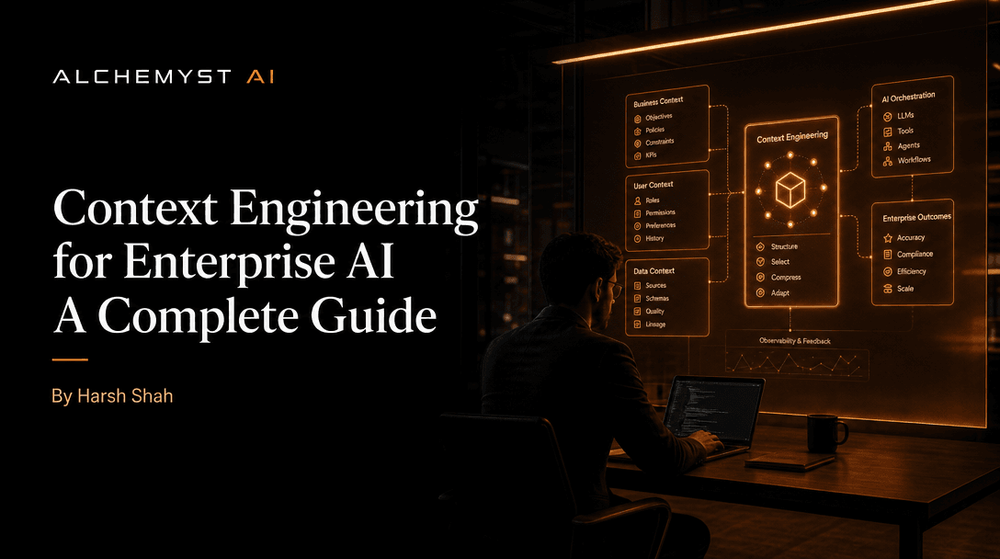
This isn't just prompt engineering. It's context engineering — a systematic approach where groupName-based scoping and semantic search over interaction logs make retrieval automatic. The agent receives only the context that's relevant to this specific lead, this specific campaign, at this specific moment.
Why Stateless Agents Hit a Ceiling
A stateless voice agent treats every call as an isolated event. It has no memory of prior interactions, no awareness of the lead's language, no record of previous objections. This creates three compounding problems:
Problem 1: Generic openings. The agent says "Hi, I'm calling from [Company] about [Product]." The prospect has heard this script before — possibly from the same agent — and hangs up. First impressions are everything, and a context-free opening wastes the most critical 5 seconds.
Problem 2: Language mismatch. A Gujarati parent receives an English call about their child's CA coaching. Even if the English is fluent, the conversation feels foreign. The Kathan voice OS (कथन) supports over 12+ Indian languages like Hindi, Tamil, Telugu, Gujarati, Kannada, Marathi, Bengali, Malayalam, Punjabi, Odia, Assamese, and Urdu, plus international languages like English, Arabic, Spanish, and French, making language matching a core capability.
Problem 3: No learning between attempts. If the lead said "call me after 6 PM" on the first attempt, a stateless agent has no way to honor that request. The second call happens at 2 PM, the lead is annoyed, and the connection rate drops further.
The Context Engineering Difference
Context engineering solves each of these problems structurally, not through better prompts or scripts:
Language detection from metadata: The Kathan agent checks the lead's region, prior language usage, and campaign configuration to select the right language before the first word is spoken.
Objection retrieval from semantic search: Prior interaction logs are indexed and searchable. If the lead raised a specific objection, the agent retrieves it and adjusts its approach.
Dynamic script branching: Instead of a linear script, the agent branches based on what it knows. A first-time lead gets discovery questions. A retarget lead gets a direct enrollment pitch. The conversation feels personalized because it is personalized.
"Industry average cold-call connection rates sit at 12–15%. Context engineering pushed Kathan to 38.7% on first contact and 57.3% on retargeted calls. The difference isn't the voice — it's the memory."
Three Questions to Ask Your Current Vendor
Connection Rate Diagnostic
- Does your agent remember anything about a lead between calls? Ask for a specific example of cross-call context persistence — not just CRM field lookup, but conversational memory.
- How does your agent decide what language to use? If the answer is 'we configure it per campaign,' that's static assignment, not context-aware language selection.
- What happens to the data your agent collects during a call? If it goes into a log file but doesn't inform the next call to the same lead, you have a stateless system with good reporting — not a context-aware agent.
If your voice AI connection rates are stuck at 15%, the fix isn't a better lead list or a different time slot. The fix is giving your agent the context it needs to make every dial count. That's what the Kathan OS delivers — and the JK Shah data proves it works at scale.