
Voice AI in 2023–2024 earned a bad reputation. Agents sounded robotic. Connection rates were indistinguishable from autodialers. The "AI" part meant the agent could understand "yes" and "no" but broke down on anything complex. Businesses spent money, got frustrated, and concluded the technology wasn't ready. If that was your experience, you were right — at the time. Three things have changed since then.
Shift 1: LLM Quality
The language models powering voice agents in 2024 struggled with Indian languages, code-switching (Hindi-English mid-sentence), and domain-specific vocabulary. A voice agent trying to discuss CA exam preparation in Gujarati would produce awkward translations that sounded like Google Translate circa 2015. The "AI" was technically generating responses, but the responses didn't sound like how people actually talk.
By early 2026, Alchemyst's Kathan engine handles a wide array of languages like Hindi, Tamil, Telugu, Gujarati, Kannada, Marathi, Bengali, Malayalam, Punjabi, Odia, Assamese, and Urdu with natural phrasing — not translation-layer approximations. This advancement is a part of our "Built in India, for the world" philosophy. The platform also supports major international languages including English, Arabic, Spanish, French, Mandarin, and Japanese.
Shift 2: Telephony Infrastructure
In 2024, programmatic voice in India was fragile. Carrier APIs were inconsistent. TRAI compliance (caller ID registration, DND filtering, call-hour restrictions) required manual management. A campaign could get blocked mid-run because of a compliance oversight that the platform didn't catch.
By 2026, providers like Exotel, Ozonetel, and others have matured their APIs significantly. TRAI compliance is automated within the Kathan voice OS (कथन) — DND filtering, caller ID registration, and call-hour restrictions are handled programmatically, not manually. The infrastructure is reliable enough that over 500,000+ calls are deployed daily across numerous campaigns without carrier-level failures.
Shift 3: Context Engineering
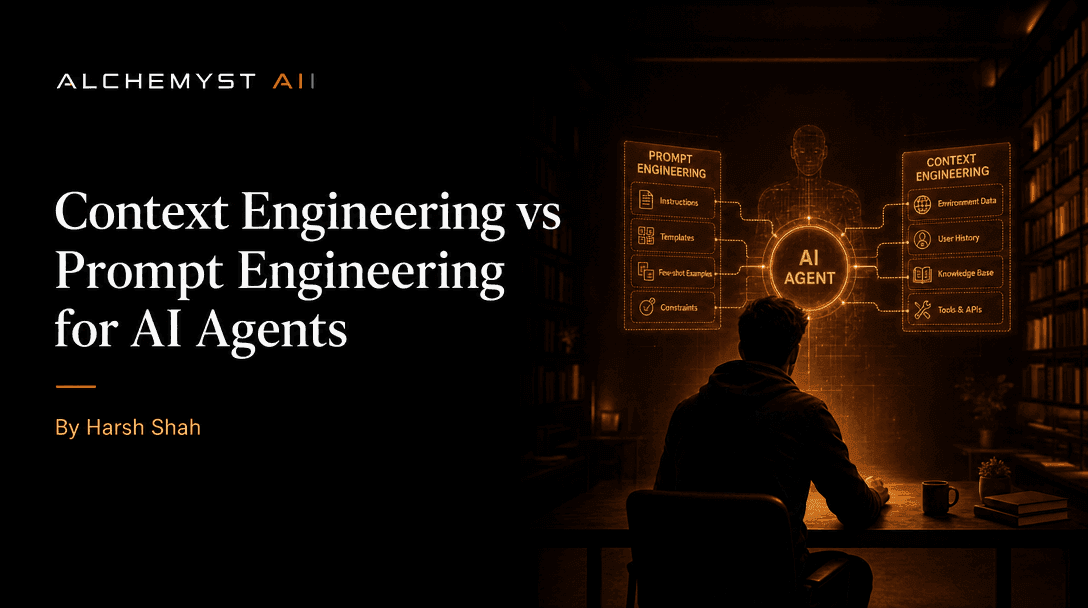
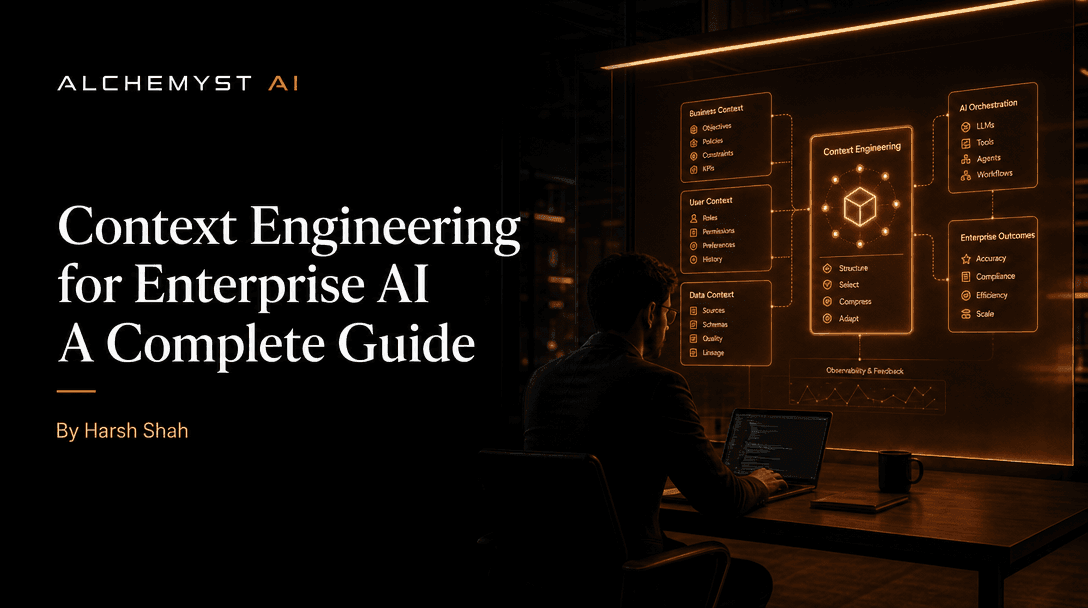
This is the structural shift — the one that changes the category, not just the product. Voice agents in 2024 were prompt-stuffed: everything the agent might need was crammed into a single prompt, and the model picked through it. The prompt included the script, the lead's name, maybe a CRM field or two, and a set of instructions. The model had to figure out what was relevant from a wall of text.
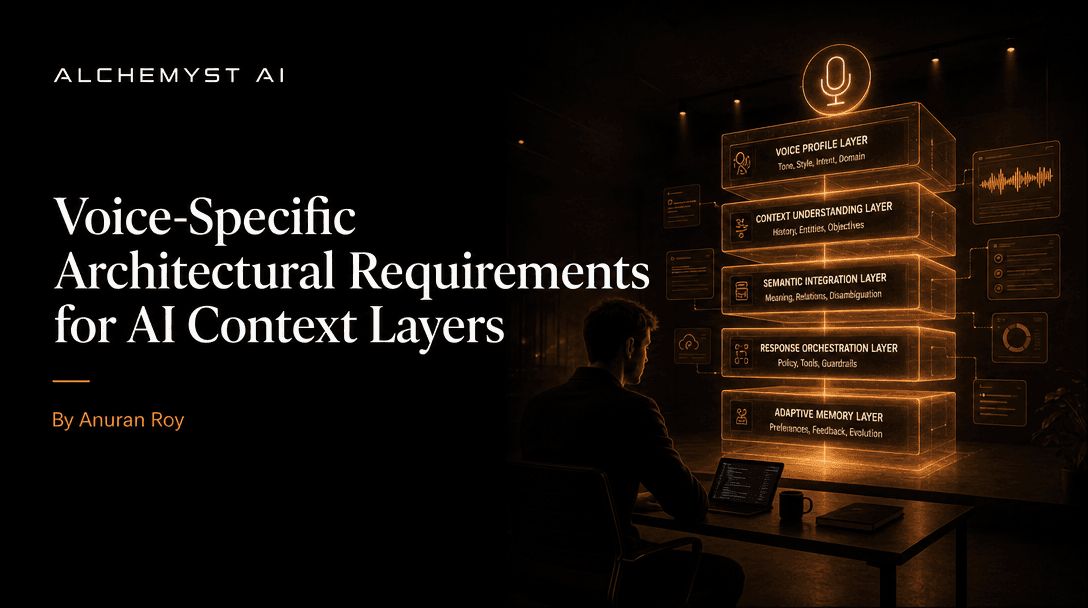
In 2026, context engineering replaces prompt stuffing with a systematic approach. The Kathan OS's context engine selects, filters, and ranks the right information for each call dynamically. The agent doesn't see irrelevant data. It sees what matters for this lead, this campaign, this moment.
| 2024: Prompt Stuffing | 2026: Kathan Context Engineering | |
|---|---|---|
| Information delivery | Everything in one prompt | Filtered, ranked, relevant context only |
| Prior interactions | Not available | Indexed, searchable, auto-retrieved |
| Language selection | Configured per campaign | Auto-detected per lead |
| Cross-campaign memory | None | Full — scoped by groupName |
| Objection handling | Generic script branches | Retrieves specific prior objections |
| Context volume | 4,000+ tokens (mostly noise) | 400 tokens (all signal) |
The difference between prompt stuffing and context engineering is the difference between giving someone a filing cabinet and giving them the three documents they need. Both approaches provide information. Only one provides the right information.
The Evidence: 2026 Performance
The JK Shah Classes deployment is a clear example of what 2026 voice AI looks like for enrollment outreach. The Unacademy deployment shows what's possible for a completely different use case: Net Promoter Score (NPS) feedback collection. In 2024, a voice agent couldn't hold the nuanced, open-ended conversations required for qualitative feedback. By 2026, Kathan can. Unacademy ran 14,258 calls to 15,088 learners across multiple campaigns, capturing detailed NPS responses at a cost of just ₹10.79 per response.
| Metric | 2024 Industry Avg | 2026 Alchemyst Kathan |
|---|---|---|
| Connection rate | 10–15% | 38.7% (first attempt) |
| Retarget connection | 12–18% | 57.3% (Gujarat) |
| Languages (native quality) | 1–2 | 12+ Indian languages |
| Campaigns managed | 1–3 concurrent | 30 sub-campaigns |
| Cost per meaningful interaction | ₹200–500 | ₹24.93 |
| Context persistence | None | Full cross-campaign memory |
38.7%
Connection rate in 2026 — across 500,000+ calls deployed daily in 12+ Indian languages. The 2024 ceiling was 15%.
"Voice AI failed in 2024 because the technology was immature across three dimensions: language quality, telephony reliability, and context architecture. All three have shifted. The 2026 category is structurally different from what you evaluated two years ago. We built Kathan in India, for the world, to solve these exact problems."
Should You Re-Evaluate?
If your last experience with voice AI was in 2024 or earlier, the category has changed enough to warrant a fresh evaluation. The specific questions to ask are different now — not "does it sound natural?" (it does) or "does it support Hindi?" (it does) but "does it carry context across interactions?" and "does it adapt to what it knows about each lead?"
The technology that disappointed you in 2024 was a voice dialer with a language model attached. The technology available in 2026 is a context-aware intelligence layer that happens to communicate through voice. The medium is the same. The architecture is fundamentally different.
See what changed — start a 48-hour pilot with Alchemyst's Kathan, our enterprise voice OS.