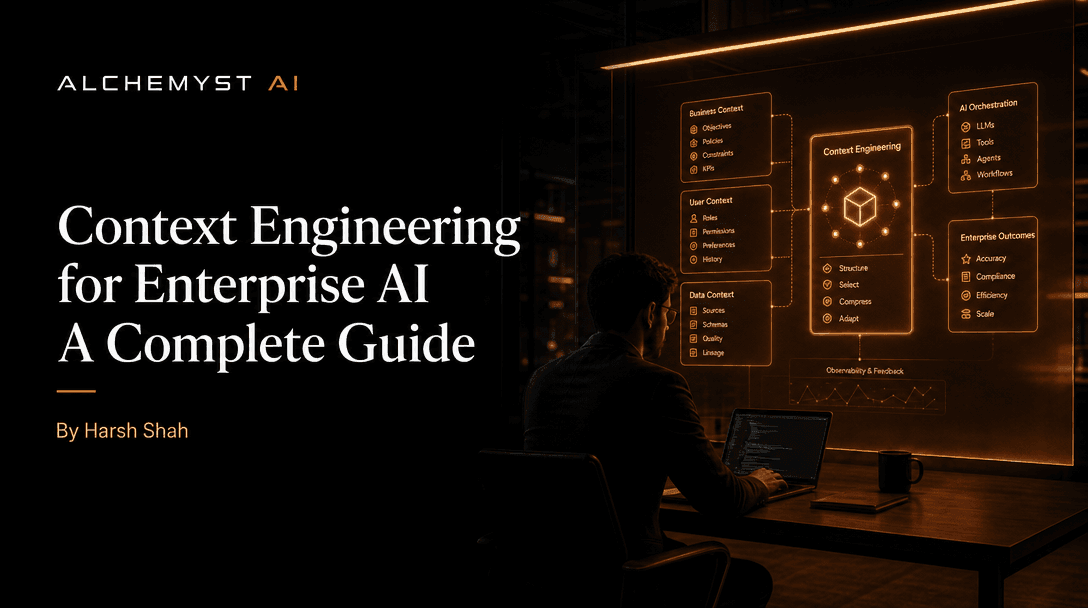

The Critical Role of Context Engineering in Modern AI
As artificial intelligence continues to permeate enterprise workflows, the initial excitement surrounding foundational models has shifted toward a more pressing, complex challenge: building AI systems that can actually hold a coherent, long-term, and state-aware conversation. This is where context engineering enters the fray. Unlike traditional prompt engineering, which focuses on providing static instructions to a Large Language Model (LLM), context engineering is the systematic, architectural practice of managing memory, state, and relevant external knowledge in real-time. It is the crucial bridge across the demo-to-production gap, transforming impressive prototypes into resilient, enterprise-grade AI agents capable of executing complex go-to-market (GTM) and sales automation tasks.
For enterprise voice AI applications specifically, the stakes are exponentially higher. A slight hallucination or a brief lapse in conversational memory might be forgivable in a text-based chatbot, but in a live, real-time voice interaction with a prospective client, it shatters trust instantly. Mastering context handling capabilities—from dynamic memory injection to integrating seamlessly with Speech-to-Text (STT) and Text-to-Speech (TTS) pipelines—is now the definitive standard for evaluating production-ready AI agent infrastructure.
Prompt Engineering vs. Context Engineering: Understanding the Shift
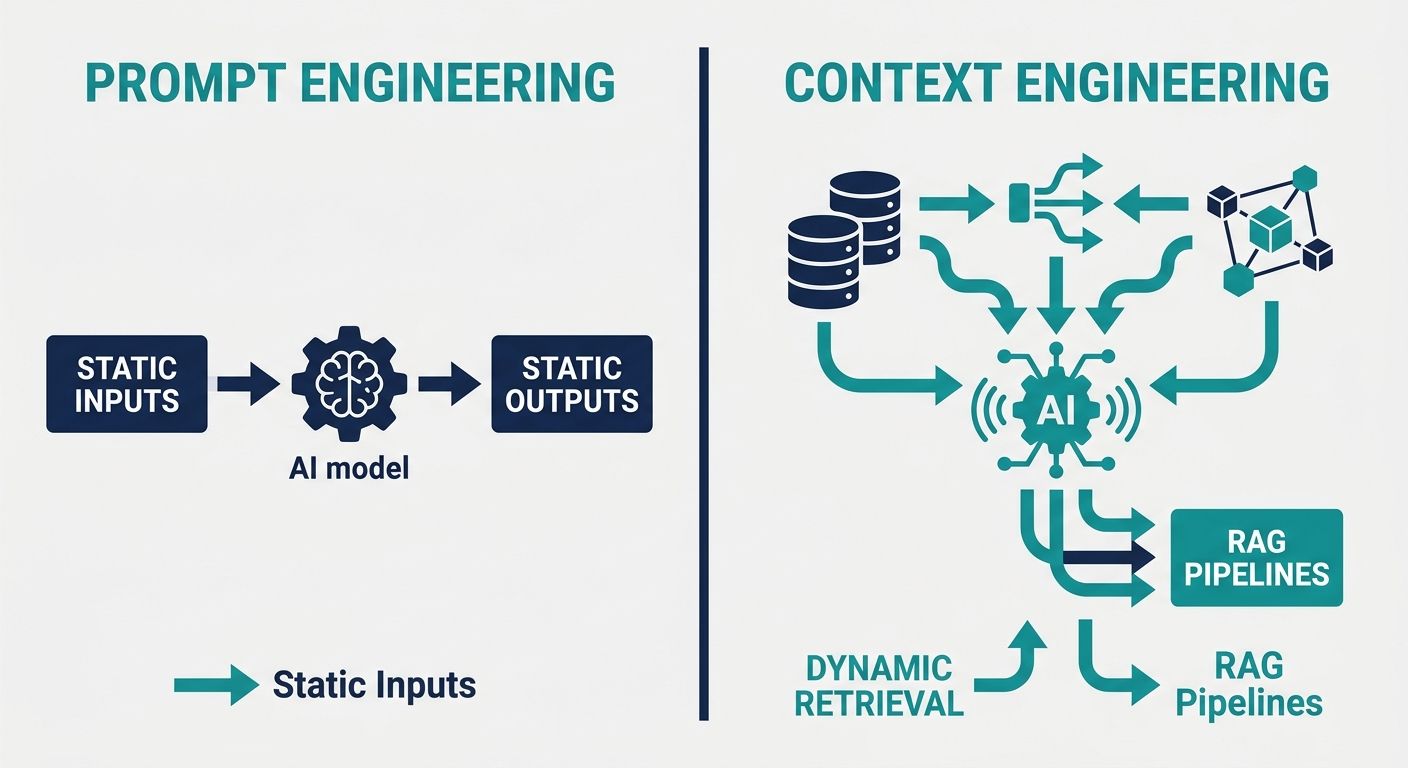
To truly grasp the value of context engineering, it is essential to distinguish it from prompt engineering. For years, the AI community has obsessed over prompt engineering - the art of phrasing questions, setting personas, and structuring instructions to coax the best possible response out of an LLM. While still important, prompt engineering is ultimately static. It tells the AI how to behave.
Context engineering, on the other hand, dictates what the AI knows at any given microsecond of a conversation. It involves dynamically assembling the exact pieces of information an agent needs to answer a query without exceeding context window limits, accumulating unnecessary token costs, or increasing latency. It is a continuous loop of ingestion, semantic structuring, memory allocation, and real-time retrieval.
- Prompt Engineering: "You are a highly skilled sales representative for a SaaS platform. Be polite, concise, and always push for a meeting."
- Context Engineering: "The user just mentioned their CRM is Salesforce. Retrieve the integration documentation for Salesforce. Note that 10 minutes ago, the user said they have a budget of $50,000. Inject this into the current working memory so the agent can propose the Enterprise Tier."
The Demo-to-Production Gap in Voice AI
Many organizations attempt to build conversational AI using basic Retrieval-Augmented Generation (RAG) frameworks or simple conversational loops. These work well in controlled demonstrations. However, when deployed in production—especially in voice AI scenarios—they inevitably encounter severe architectural bottlenecks. These bottlenecks collectively form the demo-to-production gap.
Latency and the Voice AI Challenge
In text-based AI, a user is willing to wait three to five seconds for a response as they watch a typing indicator. In voice AI, a three-second delay feels like an eternity of awkward silence. Voice-specific architectural requirements dictate that context retrieval must happen in milliseconds. STT processing already consumes a portion of your latency budget, and TTS synthesis at the end of the pipeline consumes another chunk. If your context engineering pipeline is bloated, the conversational delay will ruin the user experience.
Context Degradation Over Long Sessions
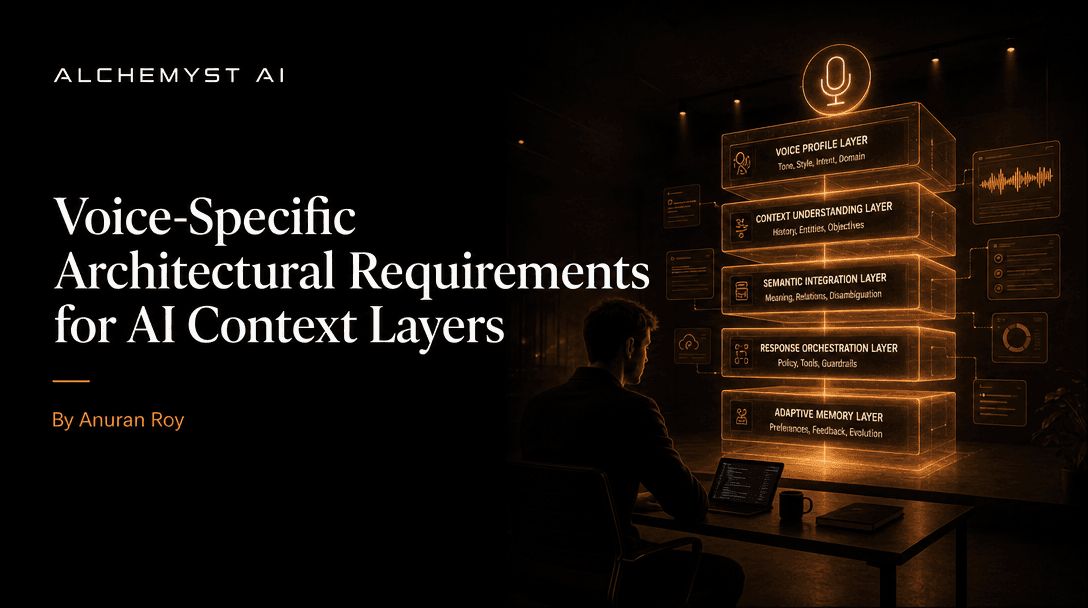
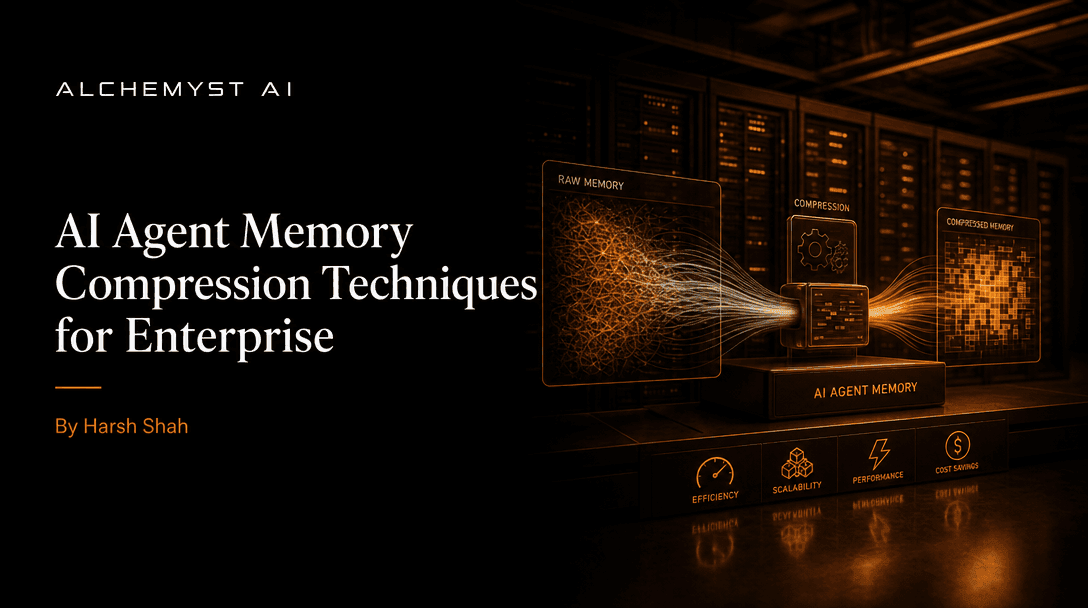
Enterprise users need agents that can handle thirty-minute discovery calls, not just three-turn customer support queries. Generic memory layers often fail by simply appending every new transcript line to the LLM's prompt. As the context window fills up, the model experiences the "lost in the middle" phenomenon—forgetting crucial details discussed earlier in the call. Effective context engineering requires sophisticated methodologies for retention, such as summarizing old turns, extracting discrete entities, and moving inactive context into long-term vector storage while keeping active topics in short-term cache.
Architectural Pillars of Production-Ready Context Engineering
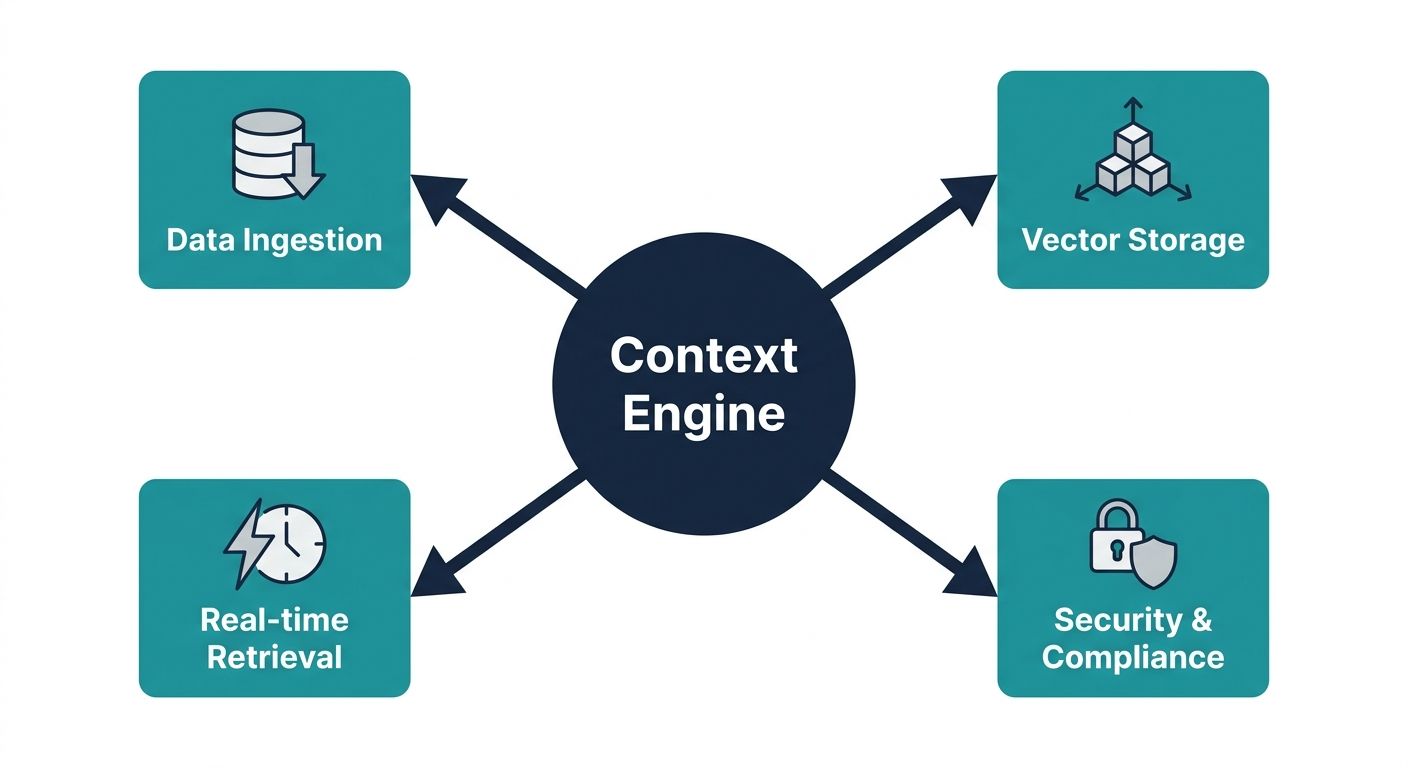
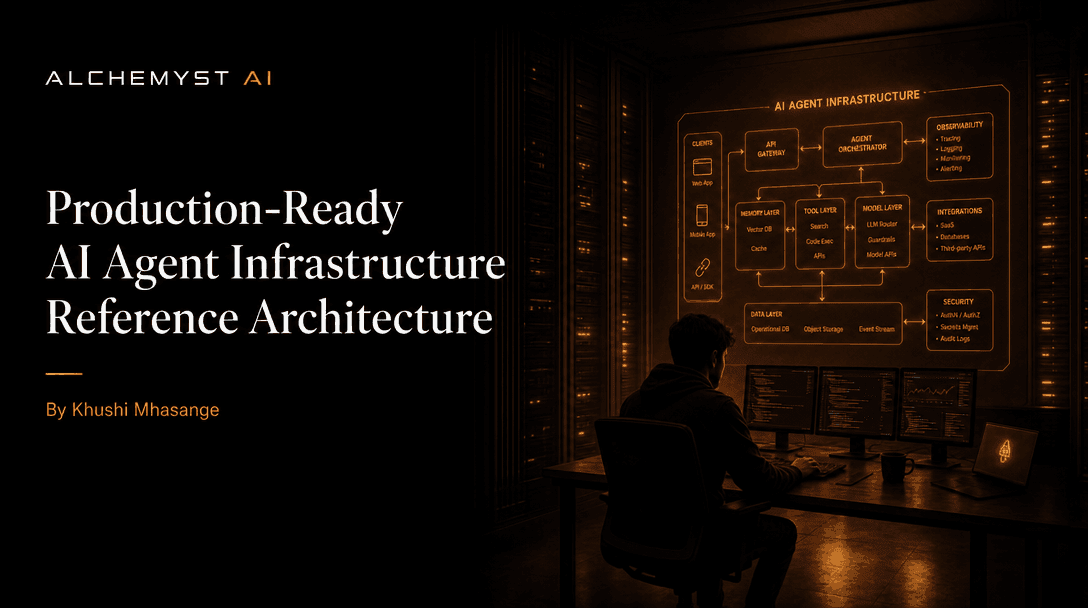
Building a reference architecture for production-ready AI agent infrastructure demands a move away from fragile integrations and toward robust, multi-layered context engines. By integrating a specialized platform like Alchemyst AI, enterprise teams can bypass the heavy lifting of building semantic routing from scratch and instantly deploy contextually aware sales and GTM agents.
1. Intelligent Information Retrieval (Beyond Basic RAG)
Standard RAG relies on semantic similarity—vectorizing a user query and pulling the closest matching document chunks. However, human conversation is rarely direct. If a prospect says, "We struggled with our last vendor's uptime," a basic RAG system might search for "uptime." A system backed by advanced context engineering will recognize the underlying intent: the prospect has trust issues regarding reliability, triggering the retrieval of SLAs, uptime statistics, and relevant case studies.
2. State and Session Management
Enterprise voice AI must operate like a state machine. Is the conversation in the "discovery" phase, the "objection handling" phase, or the "closing" phase? Context engineering involves maintaining a dynamic state tracker. As the user provides information, the context engine updates the state variables in real-time. This ensures the AI agent understands not just the current question, but where it sits in the broader trajectory of the sales or support call.
3. The Context Arithmetic Framework
Context arithmetic is the systemic evaluation of competing data points to determine relevance. When an AI agent has access to a company knowledge base, user historical data, API documentation, and real-time conversational history, it faces an overabundance of data. Context arithmetic assigns weights to these inputs based on recency, semantic relevance, and current conversational state, mathematically determining the optimal payload to inject into the LLM.
Through its proprietary Kathan engine, Alchemyst AI introduces advanced "context arithmetic" to systematically determine relevant information. This five-stage pipeline for context determination handles everything from raw information retrieval to real-time intent matching, ensuring your GTM and sales voice agents never lose the thread of conversation.
Implementing Context Engineering for Enterprise AI
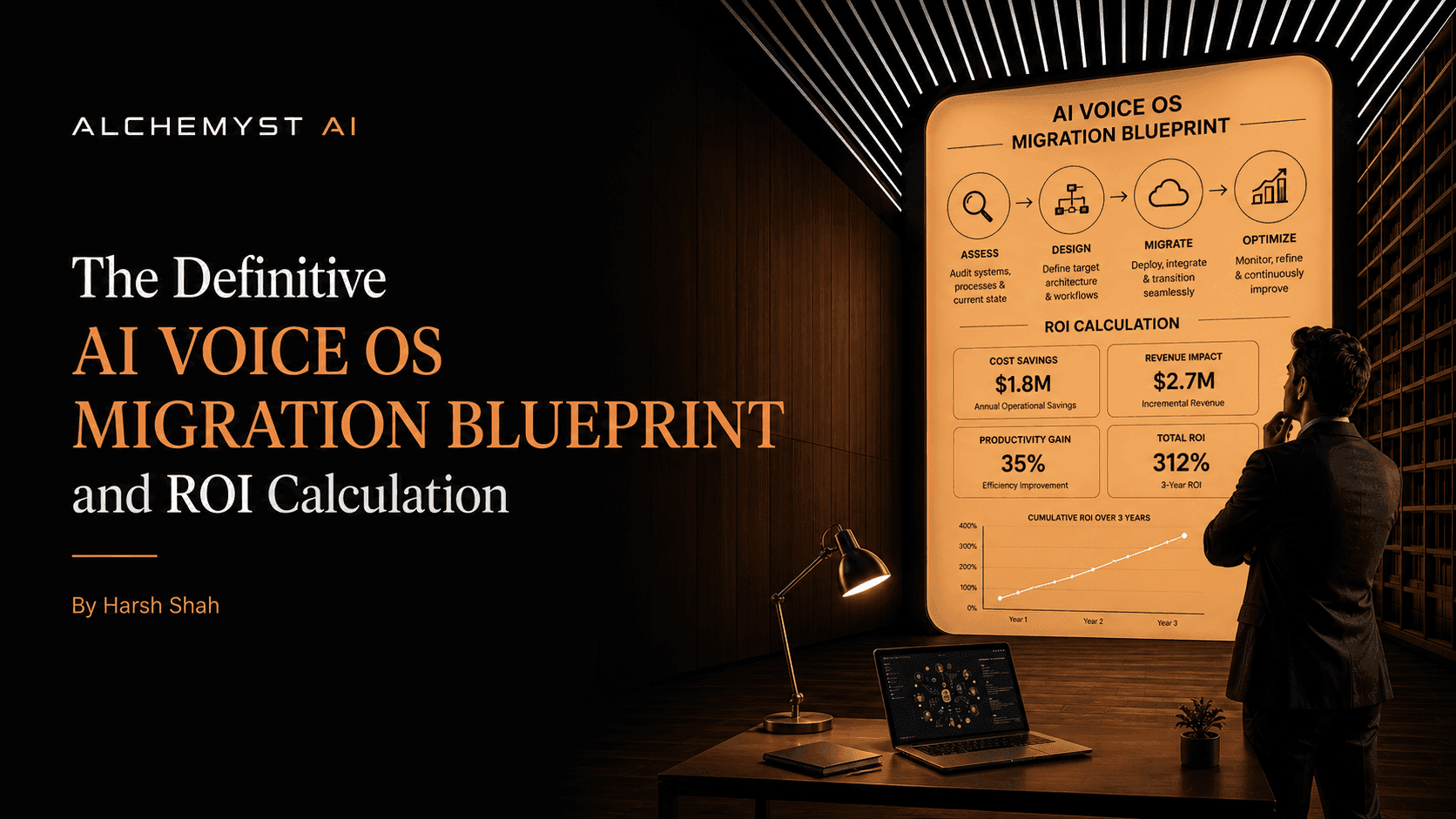
If you are looking to architect a scalable, context-aware system for your organization, a structured approach is mandatory. Here is a blueprint for implementing robust context handling capabilities.
Stage 1: Ingestion and Semantic Structuring
Context engineering starts long before the conversation begins. Your enterprise data—product catalogs, pricing matrices, objection handling playbooks, and historical call transcripts—must be ingested and structured. Do not simply dump PDFs into a vector database. Implement hierarchical chunking. Tag chunks with rich metadata, such as audience type, product line, and required conversational state. This metadata becomes crucial for accurate context routing later.
Stage 2: Short-term vs. Long-term Memory Allocation
Design a bifurcated memory architecture. Short-term memory should act as a rapid-access cache holding the last 5 to 10 turns of the conversation verbatim. Long-term memory should store compressed insights. As the conversation progresses, employ a background process to summarize the short-term memory, extract key entities (e.g., "Budget: $100k", "Timeline: Q3"), and write them to a persistent user profile. This prevents token bloat while ensuring the agent never forgets a critical detail.
Stage 3: Real-time Context Injection and Pruning
When the user speaks, the system must perform rapid context determination. Retrieve the user's long-term profile, pull relevant external knowledge via semantic search, and combine it with the short-term conversational history. Then, crucially, prune this payload. Remove redundant information. Trim the injected context down to the bare minimum required to formulate a highly accurate response. This keeps token counts low and inference speeds lightning-fast, meeting the strict latency budgets of voice AI.
Overcoming Common Implementation Challenges
Transitioning to an AI-native context management system is not without its hurdles. Engineering teams must anticipate and mitigate several common pitfalls.
Mitigating Latency in STT and TTS Pipelines
In a voice AI agent, the time taken to process audio to text (STT) and generate audio from text (TTS) limits the time available for LLM inference and context retrieval. To optimize this, context engineering must happen asynchronously where possible. Predictive context pre-fetching—where the engine anticipates the likely next turns based on the conversation state and pre-loads relevant documents into memory—can shave hundreds of milliseconds off the response time.
Handling Interruptions and Barge-ins
Human conversation is messy. Users interrupt, change their minds mid-sentence, and refer back to topics from twenty minutes ago. A robust context engine must support "barge-ins." When a user interrupts the AI mid-sentence, the context engine must instantly log the partial completion of the AI's thought, record the user's interruption as a high-priority context shift, and dynamically pivot the conversational state tracker to address the new input.
Why Generic Platforms Fall Short in Context Engineering
The market is currently flooded with generic AI platforms offering "drop-in memory" or basic API endpoints for LLM access. While these tools may serve hobbyists and internal utilities well, they fall apart under enterprise demands. A platform that simply saves chat history to a database and retrieves it via standard similarity search is not performing true context engineering.
Enterprise voice AI requires a platform engineered from the ground up for dynamic state management and rapid context arithmetic. Without a dedicated context determination pipeline, agents will inevitably hallucinate, repeat themselves, or freeze when asked to synthesize disparate pieces of information during a live sales call. The focus must be on actionable context handling—evaluating types of context, defining technical methodologies for retention, and rigorously testing memory duration limits against quantifiable performance metrics.
Metrics for Evaluating Context Engineering Success
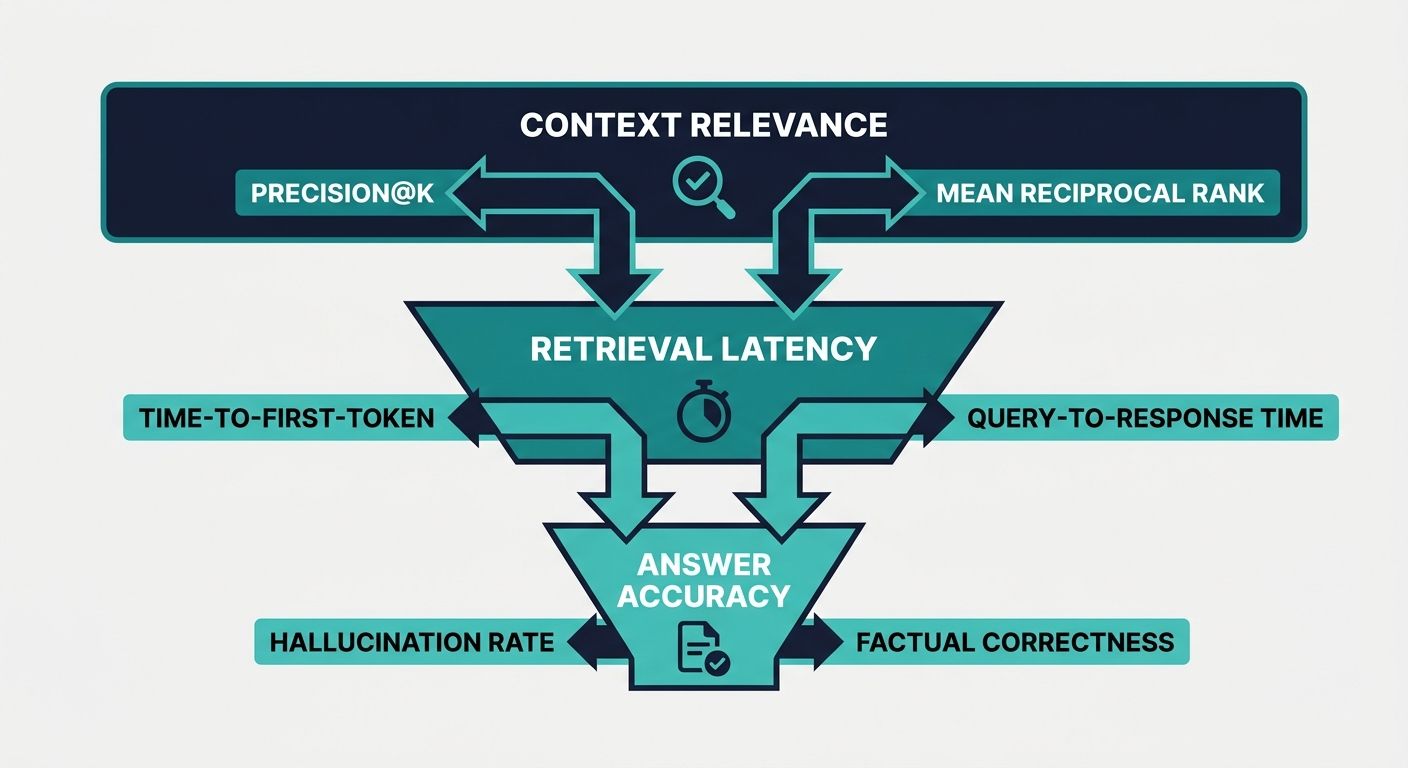
How do you know if your context engineering architecture is actually working? You must implement observability and track specific context-focused metrics:
- Context Precision: Of the documents and data points injected into the prompt, what percentage were actually used by the LLM to formulate the response? Low precision indicates your retrieval pipeline is too noisy.
- Context Recall: Did the injected payload contain all the necessary information to answer the user's implicit and explicit queries? Low recall leads to AI hallucinations or "I don't know" responses.
- State Accuracy: How often does the state tracker correctly identify the current phase of the conversation?
- Time-to-First-Byte (TTFB) Context Routing: The total latency introduced strictly by the context retrieval, memory reading, and payload pruning processes before the LLM inference begins.
The Future of Context-Aware AI Agents
The evolution of AI agents is moving rapidly from stateless, reactive bots to proactive, highly contextual digital workers. As go-to-market teams increasingly rely on AI to scale their outbound outreach, qualify inbound leads, and handle routine customer interactions, the sophistication of the underlying context engineering will be the primary differentiator between success and failure.
We are moving toward an era where AI agents do not just recall what was said five minutes ago; they will understand the historical relationship with the client, the current market dynamics, the strategic goals of the sales campaign, and the real-time emotional sentiment of the user's voice. All of this data must be systematically engineered, weighted, and injected flawlessly to create interactions that feel genuinely human and exceptionally capable.
Context engineering is the defining factor between a fragile AI wrapper and a resilient, enterprise-grade automation system. Whether you are scaling outbound sales calls or managing complex GTM workflows, reliable memory and state management are non-negotiable.